
Futmak · الفتوحات المكية · Meccan Revelations

Fütûhât-ı Mekkiyye

Yazma cildi 5 · Sayfa 5

Konya yazması

Arapça kaynağı açİngilizce çeviriyi aç

Arapça

المعنوية التي هي روح هذه الجنة المحسوسة من الفرح الإلهي، من صفة الكمال والابتهاج والسرور. فكانت الجنة المحسوسة كالجسم، والجنة المعقولة كالروح وقواه.

ولهٰذا سماها الحق تعالى الدار الحيوان لحياتها، فأهلها يتنعمون فيها حسا ومعنى، فالمعنى الذي هو اللطيفة الإنسانية. والجنة أيضا أشد تنعما بأهلها الداخلين فيها، ولهٰذا تطلب ملأها من الساكنين. وقد ورد خبر عن النبي صلى الله عليه وسلم أن الجنة اشتاقت إلى بلال وعلي وعمار وسلمان.

فوصفها بالشوق إلى هٰؤلاء، وما أحسن موافقة هذه الأسماء لما في شوقها من المعاني. فإن الشوق من المشتاق فيه ضرب ألم لطلب اللقاء، وبلال من أبل الرجل من مرضه واستبل، ويقال بل الرجل من دائه وبلال معناه، وسلمان من السلامة من الآلام والأمراض، وعمار أى بعمارتها بأهلها يزول ألمها.

فإن الله سبحانه يتجلى لعباده فيها، فعلي يعلو بذٰلك التجلي شأنها على النار التي هي أختها، حيث فازت بدرجة التجلي والرؤية، إذ كانت النار دار حجاب. فانظر في موافقة هذه الأسماء الأربعة لصورة حال الجنة حين وصفها بالشوق إلى هٰؤلاء الأصحاب من المؤمنين.

(مراتب الاشتهاء)

والناس على أربع مراتب في هذه المسألة:[1] فمنهم من يشتهي

Notlar

[1]

(ضُبط المبني للمعلوم والمبني للمجهول وفق الطبعة الأحدث: «يشتهي» و«يُشتهى»، ليتبين الفرق بين المراتب الأربع.)
İngilizce

intelligible Garden, the spirit of this sensible Garden, from divine joy, from the attribute of perfection, rejoicing, and gladness. The sensible Garden is thus like the body, and the intelligible Garden is like the spirit and its powers.

This is why the Real, exalted is He, called it the Living Abode, on account of its life. Its inhabitants enjoy bliss in sense and meaning, with meaning belonging to the subtle human reality. The Garden itself takes even greater delight in those who enter it. This is why it seeks to be filled with inhabitants. A report from the Prophet, may God bless him and grant him peace, says that the Garden longed for Bilal, Ali, Ammar, and Salman.

He described it as longing for these men, and how beautifully their names correspond to the meanings of its longing. In one who longs, longing entails a kind of pain through the desire to meet. Bilal is from aballa or istaballa, when a man recovers from an illness. One also says balla when a man is cured of his ailment, and this is what Bilal signifies. Salman is from salāmah, safety from pains and illnesses. Ammar means that when the Garden is filled with its inhabitants, its pain disappears.

God, glory be to Him, discloses Himself to His servants in the Garden. Thus, with that disclosure, Ali signifies that the Garden's standing rises above that of its sister, the Fire. It has attained the degree of self-disclosure and vision, whereas the Fire is an abode of veiling. Consider how these four names correspond to the Garden's state when he described it as longing for these believing Companions.

(The Ranks of Desire)

People fall into four ranks in this matter.[1] Among them are those who desire

Notlar

[1]

(The active and passive forms, “desires” and “is desired,” were vocalized according to the newer edition to distinguish the four ranks.)

Translator’s note TN1281-1: These are associations the author draws between names and Arabic roots: Bilal with recovery, Salman with safety, Ammar with making a place inhabited, and Ali with elevation. The Garden is the subject of the desire ascribed to it in the report.

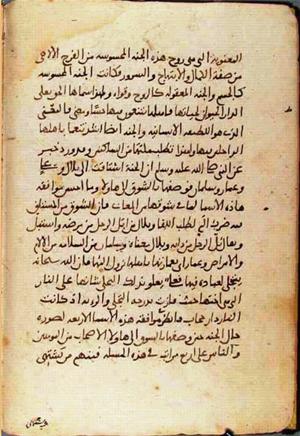
Yazma görüntüsüYazma cildi 5 · Sayfa 5

Arapça ve İngilizce aynı Konya sayfa kimliğiyle bağlanır. Sayfa eşleştirmesi yaklaşıktır; doğrulamak için yazma görüntüsüne bakın.

Kahire kaynak referansı

Ibn al-Arabi, The Meccan Revelations — Yazma cildi 5 · Sayfa 5 — https://www.futmak.com/turkce/konya/pages.php?id=1281&text=both