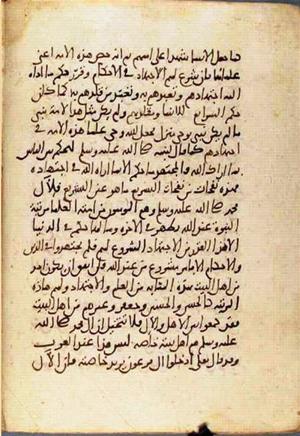
as He made the prophets witnesses over their communities.
(Independent Interpretation and the Inheritance of Knowledge)
He singled out this community, by which I mean its scholars, by prescribing independent interpretation of rulings for them, affirming what their interpretation leads to, and requiring them and those who follow their authority to worship in accordance with it. This is like the ruling of revealed laws for the prophets and those who followed their authority. No community of a prophet had anything comparable unless there was a prophet with revelation sent down to him.
God placed the revelation of this community’s scholars in their independent interpretation, as He told His Prophet, may God bless him and grant him peace, “So that you may judge between people by what God has shown you” [al-Nisaʾ 4:105]. The qualified interpreter judges only by what God has shown him through his independent interpretation. These are breaths of lawgiving, distinct from lawgiving itself. The folk of Muḥammad, may God bless him and grant him peace, the believing scholars of his community, thus have a rank of prophethood with God that appears in the hereafter. Its only effect in this world is this measure of independent interpretation prescribed for them. Their interpretation in religion and rulings proceeds only by a prescribed command from God.
If someone of the Prophet’s household has this degree of knowledge and independent interpretation, possessing this rank, such as al-Ḥasan, al-Ḥusayn, Jaʿfar, and others of the household, he combines membership in the household and in the folk. So do not imagine that the folk of Muḥammad, may God bless him and grant him peace, are exclusively his household. This is outside Arabic usage. He, exalted is He, says, “Bring in Pharaoh’s folk” [Ghafir 40:46], meaning his elect, for the term “folk”
Notes
Translator’s note TN2299-1: “Independent interpretation” renders ijtihād and “qualified interpreter” renders mujtahid. The author describes their permitted rulings as breaths of lawgiving while expressly distinguishing them from lawgiving revelation.