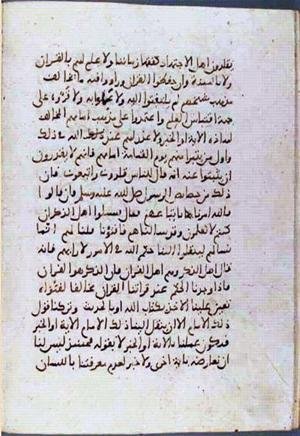
follow those capable of independent legal reasoning on their authority, like the jurists of our time, who have no knowledge of the Quran or the Sunna.
Even if they have memorized the Quran, when they see in it something that differs from their master’s position, they disregard it, leave it unpracticed, and fail to read it with a view to acquiring knowledge. They rely on the position of their imam, which opposes this verse or report, and have no excuse before God for that. The first to disown them on the Day of Resurrection will be their imam. They cannot establish that he said to people, “Take my views on authority and follow me,” for that is peculiar to the Messenger, may God bless him and grant him peace.
If they say, “God commanded us to follow them. He said, ‘Ask the people of remembrance if you do not know’ [al-Nahl 16:43], and we asked them and they gave us a legal opinion,”
we answer, “We ask them to transmit God’s ruling to us in these matters. Their personal opinion is outside the request. He said ‘the people of remembrance,’ and they are the people of the Quran, for the remembrance is the Quran.”
If, on reading the Quran, we find the ruling differs from his legal opinion, we must take the Book of God or the hadith and leave that imam’s statement. If the imam transmits the verse or report to us, our practice is based on the verse or report itself, with his transmission as its means.
In that case we have no right to oppose him with another verse or report, because of our lack of knowledge of the language