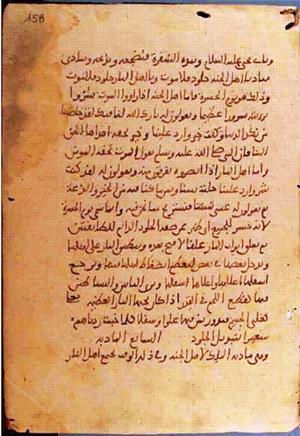
John, peace be upon him, comes with a blade in his hand, lays it down, and slaughters it. A herald calls, “People of the Garden, abiding forever and no death! People of the Fire, abiding forever and no death!” That is the Day of Regret.
As for the people of the Garden, when they see death they are overjoyed at the sight of it. They say to it, “May God make you a blessing to us. You delivered us from the misery of this world. You were the best arrival for us and the finest gift the Real gave us.” For the Prophet, may God bless him and grant him peace, says, “Death is the believer’s gift.” As for the people of the Fire, when they see it, they are terrified of it. They say, “You were the worst arrival for us. You came between us and the good and ease we enjoyed.” Then they say to it, “Perhaps you will make us die, and we shall be relieved of what we are in.”
The slaughter of death was called the Day of Regret because it laid bare to both groups that they would abide forever. Then the gates of the Fire are closed, never to open again. The Fire closes in upon its people, and its parts enter into one another to increase the pressure on them. Its lowest part becomes its highest, and its highest part becomes its lowest. People and devils are seen in it like pieces of meat in a pot with a great fire underneath. It boils as scalding water boils, churning those in it up and down. “Whenever it subsides, We increase the blaze for them” [al-Isra 17:97], by replacing their skins.
Seventh: The Banquet
It is the King’s banquet for the people of the Garden. At that time the people of the Fire assemble
Notes
Translator’s note TN1274-1: The explanation of “Regret” (ḥasrah) again invokes uncovering (ḥasara), as at ID 1209. In this passage what becomes unmistakably clear is the perpetual abiding of the two groups.