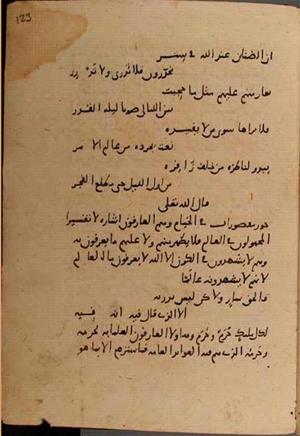
The treasured ones are veiled with God,
Secluded: they are not known, nor do they know.
Even from themselves He guards them jealously, just as there was hidden
Among the nights, for protection, the Night of Decree.
No one sees it except one not confined
By an attribute stripping him from the world of Command.
He appears to his observer from behind his zāfir,
From the beginning of night until the rising of dawn.
(The Veiling of the Treasured Ones and the Hiddenness of Knowledge)
God, exalted is He, said: ﴿Fair ones confined within pavilions﴾ [al-Raḥmān 55:72]. These are the knowers—by way of allusion, not exegesis[91]—unknown within the world. Nothing appears from them or upon them through which they might be known. They witness nothing within engendered being but God. They do not know what the world is, because they do not witness it as a world.
The Real pervades, but none knows Him / Except the one who said of Him that He is within him.
(Witnessing the Real and Believing in the World)
Every sovereign has a protected household and a sanctuary. These knowers, learned in Him, are His protected household; His sanctuary, within which they dwell, is ordinary customary ways. He has veiled them only through what is
Notes
Translator’s note: The supplied zāfirihi in the poem is unclear. The root can concern breathing out or support and retinue; the word is retained without emending its consonants. Its possessive reference is also compressed.
Translator’s note: In the concluding couplet, the active qāla permits ‘the one who said of Him that He is within him’ or ‘the one of whom He said that He is within him.’ The pronoun references remain compressed.