The Meccan Revelations

Manuscript volume 29 · Page 13

Konya manuscript

Open Arabic sourceOpen English translation

Arabic

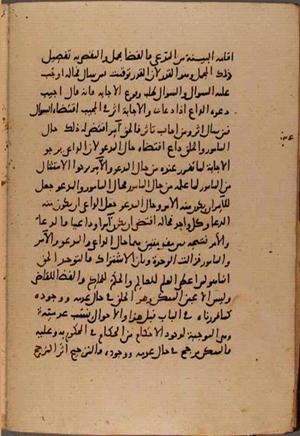
إقامة البينة من المدعي.

(القضاء والقدر والسؤال)

فالقضاء مجمل، والمقضي به تفصيل ذٰلك المجمل، وهو القدر؛ لأن القدر توقيت. فمن سأل فحاله أوجب عليه السؤال، والسؤال طلب وقوع الإجابة فإنه قال: ﴿أُجِيبُ دَعْوَةَ الدَّاعِ إِذا دَعانِ﴾ [البقرة: ١٨٦].

والإجابة أثر في المجيب اقتضاه السؤال، فمن سأل أثر، ومن أجاب تأثر. فالحق آمر، اقتضى له ذٰلك حال المأمور. والخلق داع، اقتضاه حال المدعو؛ لأن الداعي يرجو الإجابة لما تقرر عنده من حال المدعو.

والآمر يرجو الامتثال من المأمور؛ لما علمه من حال المأمور. فحال المأمور جعل للآمر أن يكون منه الأمر وحال المدعو جعل للداعي أن يكون منه الدعاء.

وكل واحد فحاله اقتضى أن يكون آمرا أو داعيا. فالدعاء والأمر نتيجة بين مقدمتين هما حال الداعي والمدعو، والآمر والمأمور؛ فزالت الوحدة، وبان الاشتراك.

(الأحوال وأحكام الممكن)

فالتوحيد الحق إنما هو لمن أعطى العلم للعالم والحكم للحاكم والقضاء للقاضي وليس إلا عين الممكن، وهو الخلق في حال عدمه ووجوده، كما قررناه في الباب قبل هٰذا.

والأحوال نسب عدمية، وهي الموجبة لوجود الأحكام من الحكام في المحكوم به وعليه. فالممكن مُرَجَّح في حال عدمه ووجوده؛ فالترجيح أثر المُرَجِّح
English

the production of evidence from the claimant.

(Decree, Determination, and Asking)

Decree is summed up, and what is decreed is the differentiation of that summation: this is determination, for determination is timing. Whoever asks has had asking necessitated for him by his state. Asking seeks the occurrence of a response, for He said: ﴿I answer the call of the caller when he calls Me﴾ [al-Baqara 2:186].

The response is an effect within the responder required by the asking. Whoever asks therefore affects, and whoever answers is affected. The Real commands, this being required of Him by the state of the one commanded. The creature calls, this being required by the state of the one called, for the caller hopes for a response because of what has been established for him concerning the state of the one called.

The commander hopes for compliance from the one commanded because of what he knows of the commanded one's state. The commanded one's state thus causes the command to proceed from the commander, and the state of the one called causes the call to proceed from the caller.

The state of each requires that he be a commander or a caller. Calling and commanding are therefore a conclusion between two premises: the states of caller and called, and of commander and commanded. Oneness thus disappears, and participation becomes evident.

(States and the Rulings of the Possible Thing)

True affirmation of oneness belongs only to that which gives knowledge to the knower, ruling to the ruler, and decree to the judge. This is nothing but the entity of the possible thing—the creature in its state of nonexistence and existence—as we established in the chapter before this.

States are nonexistent relations, and they necessitate the existence of rulings from rulers concerning what is ruled and what it is ruled upon. The possible thing is thus given preponderance in its state of nonexistence and existence. Giving preponderance is the effect of the giver of preponderance

Manuscript imageManuscript volume 29 · Page 13

Arabic and English are linked by the same Konya page ID. Page alignment is approximate; consult the manuscript image for verification.

Cairo source reference

Ibn al-Arabi, The Meccan Revelations — Manuscript volume 29 · Page 13 — https://www.futmak.com/english/konya/pages.php?id=8573&text=both