
Futmak · الفتوحات المكية · Meccan Revelations

The Meccan Revelations

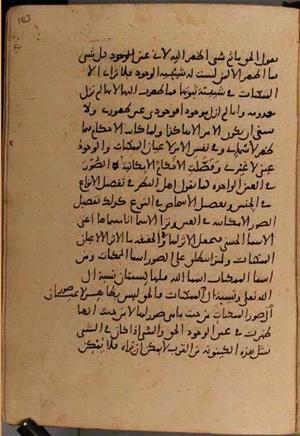
Manuscript volume 28 · Page 208

Konya manuscript

Open Arabic sourceOpen English translation

Arabic

الإلهية التي أعطتها أعيان الممكنات العلوم بها[78].

(حكم الكثرة والوحدة)

ومن هنا تعلم حكم الكثرة والوحدة، والمؤثِّر، والمؤثَّر فيه، والأثر، ونسبة العالم من الله، ونسبة تنوع الصور الظاهرة، وما ظهر، ومن ظهر، وما بطن، ومن بطن، وحقيقة ﴿الْأَوَّلُ والْآخِرُ والظَّاهِرُ والْباطِنُ﴾ [الحديد: ٣]، وإنها نعوت لمن ﴿له الْأَسْماءُ الْحُسْنى﴾ [طه: ٨؛ الحشر: ٢٤].

فتحقق ما ذكرناه في هٰذا الباب، فإنه نافع جدا، يحوي على أمر عظيم لا يقدر قدره إلا الله.

(معرفة النفس ومعرفة الرب)

فمن عرف هٰذا الباب عرف نفسه، هل هو الصورة، أو هو عين واهب الصورة، أو هو عين العين الثابتة الممكنة التي لها العدم من ذاتها؟

ومن عرف نفسه عرف ربه، ضرورة، فما يعرف الحق إلا الحق.

فلا تقدم، ولا تأخر، لأن الممكن في حال عدمه ليس بمتأخر عن الأزل المنسوب إلى وجود الحق، لأن الأزل كما هو واجب لوجود الحق، هو واجب لعدم الممكن، وثبوته، وتعيينه عند الحق.

ولو لا ما هو متعين عند الحق، مميز عن ممكن آخر، لما خصصه بالخطاب في قول: ﴿كُنْ﴾ [يس: ٨٢].

ومن عرف هٰذا الباب عرف من يقول كن، ولمن يقال كن، ومن يتكون عن قول كن، ومن يقبل حكم الكاف والنون ﴿والله يَقُولُ الْحَقَّ وهُوَ يَهْدِي السَّبِيلَ﴾ [الأحزاب: ٤].

Notes

[78]

(استُكمل متعلق «العلوم» بلفظ «بها» المثبت في الطبعة الجديدة، مع إبقاء ترتيب كلام المؤلف.)
English

Names through which the entities of possible beings gave them the knowledges[78].

(The Ruling of Multiplicity and Unity)

From here you know the ruling of multiplicity and unity, the producer of an effect, what receives an effect, the effect, the world’s relation to God, and the relation of the diversity of appearing forms. You know what appeared and who appeared, what was hidden and who was hidden, and the reality of ‘the First, the Last, the Outward, and the Inward’ [al-Hadid 57:3]: these are attributes of the One to whom ‘belong the Most Beautiful Names’ [Ta Ha 20:8; al-Hashr 59:24].

Realize what we have mentioned in this chapter, for it is exceedingly beneficial and contains an immense matter whose worth none measures except God.

(Knowing the Self and Knowing the Lord)

Whoever knows this chapter knows himself: Is he the form, the very entity of the giver of form, or the very entity of the fixed possible entity, to which nonexistence belongs through its own essence?

Whoever knows himself necessarily knows his Lord. None knows the Real except the Real.

There is therefore no precedence or lateness. The possible being in its state of nonexistence is not later than the beginninglessness attributed to the Real’s existence. Just as beginninglessness necessarily belongs to the Real’s existence, it necessarily belongs to the possible being’s nonexistence, fixity, and determination with the Real.

Had it not been determined with the Real and distinguished from another possible being, He would not have singled it out for the address in the saying, ‘Be’ [Ya Sin 36:82].

Whoever knows this chapter knows who says ‘Be,’ to whom ‘Be’ is said, who is engendered from the saying ‘Be,’ and who receives the ruling of the kaf and the nun. ‘God speaks the truth, and He guides the way’ [al-Ahzab 33:4].

Notes

[78]

(The complement of ‘the knowledges’ was completed with بها, ‘through them,’ as attested in the new edition, while retaining the order of the author’s words.)

Manuscript imageManuscript volume 28 · Page 208

Arabic and English are linked by the same Konya page ID. Page alignment is approximate; consult the manuscript image for verification.

Cairo source reference

Ibn al-Arabi, The Meccan Revelations — Manuscript volume 28 · Page 208 — https://www.futmak.com/english/konya/pages.php?id=8534&text=both