
Futmak · الفتوحات المكية · Meccan Revelations

The Meccan Revelations

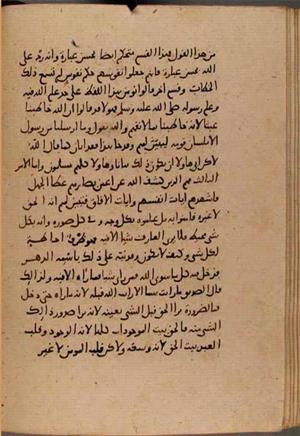
Manuscript volume 28 · Page 203

Konya manuscript

Open Arabic sourceOpen English translation

Arabic

وأنت ما بين ذا وهٰذا

أقامك الحق فيه سورة

(مقارنة المحدث بالقديم)

وينظر إلى قول أبي يزيد ما قال الجنيد: أن المحدث إذا قرن بالقديم لم يبق له أثر.

إلا أن قول الجنيد هنا أتم من قول أبي يزيد؛ فإن المحدث إذا قرنته بالقديم، كان الأثر للقديم، لا للمحدث.

فتبين لك بهذه المقارنة ما هو الأمر عليه، وهو ما قلناه، فإنه لا يمكن أن يجهل الأثر.

وإنما كان قبل هذه المقارنة ينسب إلى المحدث، فلما قرنه بالقديم رأى الأثر من القديم، ورأى المحدث عين الأثر، فقال ما قال.

(الخليل والبيت المعمور)

ولا نشك، بعد أن تقرر هٰذا، أن الخليل إبراهيم ع بهذه المثابة، هو والرسول، صلوات الله عليهم، قد وسع قلبه الحق، فجعله تعالى مسندا ظهره إلى البيت المعمور.

وما دخله، لأنه لو دخله لوسع البيت المعمور الحق، لأنه قد وسع من وسعه.

وهي إشارة، لا حقيقة[75]؛ فإن جسم إبراهيم ع محصور بحبرون، بلا شك.

فما نريد إلا الصورة التي هو عليها في البرزخ الذي انتقل إليه، بالموت.

(إخلاء القلب وذكر القرآن)

وأما قوله: «وأخلاه من غيري»، هو قوله ع فيمن يقرأ القرآن: «من شغله ذكري»، يعني القرآن، يقرأه العبد، «عن مسألتي أعطيته أفضل ما أعطي السائلين».

قال تعالى:

Notes

[75]

(ينبّه المؤلف هنا إلى أن كلامه في صورة الخليل في البرزخ، كما يفسّره في الجملة التالية.)
English

You are between this and that;

the Real established you within it as a sura.

(Comparing the Temporally Originated with the Beginningless)

Al-Junayd’s saying bears upon Abu Yazid’s statement: When the temporally originated is compared with the Beginningless, no effect remains to it.

Al-Junayd’s statement here is more complete than Abu Yazid’s. When you compare the temporally originated with the Beginningless, the effect belongs to the Beginningless, not to the temporally originated.

Through this comparison, the affair becomes clear to you as it is, which is what we have said. The effect cannot be unknown.

Before this comparison, it was attributed to the temporally originated. When he compared it with the Beginningless, he saw the effect as coming from the Beginningless and saw the temporally originated as the very effect, so he said what he said.

(The Intimate Friend and the Frequented House)

Now that this has been established, we do not doubt that Abraham the Intimate Friend, peace be upon him, is of this standing, as is the Messenger, God’s blessings be upon them: his heart encompassed the Real. He—exalted is He—therefore placed him with his back resting against the Frequented House.

He did not enter it, for had he entered it, the Frequented House would have encompassed the Real, because it would have encompassed the one who encompasses Him.

This is an allusion, not a literal reality[75], for Abraham’s body, peace be upon him, is confined in Hebron without doubt.

We mean only the form in which he is in the isthmus, to which he passed through death.

(Emptying the Heart and the Remembrance of the Qurʾan)

As for His saying, ‘and empties it of other than Me,’ it is his saying, peace be upon him, concerning one who recites the Qurʾan: ‘Whoever is occupied by My remembrance’—meaning the Qurʾan, which the servant recites—‘rather than asking Me, I give him better than what I give those who ask.’

God Most High said:

Notes

[75]

(The author points out here that he is speaking of the Intimate Friend’s form in the isthmus, as he explains in the following sentence.)

Manuscript imageManuscript volume 28 · Page 203

Arabic and English are linked by the same Konya page ID. Page alignment is approximate; consult the manuscript image for verification.

Cairo source reference

Ibn al-Arabi, The Meccan Revelations — Manuscript volume 28 · Page 203 — https://www.futmak.com/english/konya/pages.php?id=8529&text=both