
Futmak · الفتوحات المكية · Meccan Revelations

The Meccan Revelations

Manuscript volume 3 · Page 210

Konya manuscript

Open Arabic sourceOpen English translation

Arabic

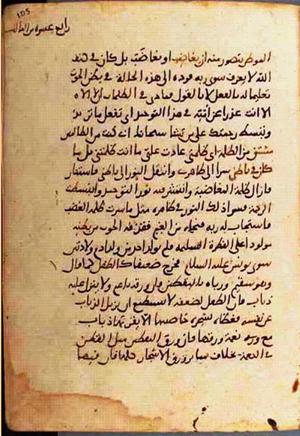
الموطن يتصور منه أن يغاضب أو يغاضب؟[49] بل كان في كنف الله لا يعرف سوى ربه، فرده إلى هذه الحالة في بطن الحوت تعليما له بالفعل لا بالقول.

﴿فَنادى في الظُّلُماتِ أَنْ لا إِلهَ إِلَّا أَنْتَ﴾، عذرا عن أمته في هٰذا التوحيد، أي تفعل ما تريد وتبسط رحمتك على من تشاء. ﴿سُبْحانَكَ إِنِّي كُنْتُ من الظَّالِمِينَ﴾ [الأنبياء: ٨٧]، مشتق من الظلمة، أي ظلمتي عادت على، ما أنت ظلمتني، بل ما كان في باطني سرى إلى ظاهري.

وانتقل النور إلى باطني فاستنار، فأزال ظلمة المغاضبة وانتشر فيه نور التوحيد وانبسطت الرحمة. فسرى ذٰلك النور في ظاهره مثل ما سرت ظلمة الغضب، فاستجاب له ربه فنجاه من الغم، فقذفه الحوت من بطنه مولودا على الفطرة السليمة.

فلم يولد أحد من ولد آدم ولادتين سوى يونس عليه السلام، فخرج ضعيفا كالطفل كما قال: ﴿وهُوَ سَقِيمٌ﴾ [الصافات: ١٤٥]. ورباه باليقطين، فإن ورقه ناعم ولا ينزل عليه ذباب، فإن الطفل لضعفه لا يستطيع أن يزيل الذباب عن نفسه.

فغطاه بشجرة خاصيتها أن لا يقربها ذباب مع نعمة ورقها، فإن ورق اليقطين مثل القطن في النعمة بخلاف سائر ورق الأشجار كلها، فإن فيها

Notes

[49]

(تكرر الفعل بهذه الحروف في المصدر؛ أُبقي دون ترجيح ضبط لأحد الموضعين.)
English

place, be conceived as entering into anger—or entering into anger?[49] Rather, he was in God’s care, knowing none but his Lord. He returned him to this condition in the fish’s belly, teaching him by action rather than by words.

“He called out in the darknesses: There is no god but You,” offering an excuse for his community through this affirmation of divine unity: that is, You do what You will and extend Your mercy over whom You will. “Glory be to You! I have been among the wrongdoers” [al-Anbiyaʾ 21:87]. This derives from darkness: that is, my darkness has returned upon me. You did not wrong me; rather, what was within me flowed into my outward condition.

The light moved into my inward self and illuminated it, removing the darkness of anger. The light of divine unity spread within it, and mercy expanded. That light then flowed into his outward condition, just as the darkness of anger had flowed there. His Lord answered him and delivered him from grief. The fish cast him out of its belly as one newly born upon the sound original disposition.

No child of Adam has been born twice except Jonah, peace be upon him. He came forth weak like a child, as He says: “while he was sick” [al-Saffat 37:145]. He nurtured him with the gourd plant, for its leaves are soft and no flies settle upon it. A child, owing to his weakness, cannot remove flies from himself.

He covered him with a plant whose special property is that flies do not approach it, together with the softness of its leaves. The gourd’s leaves are like cotton in their softness, unlike the leaves of all other trees, which have

Notes

[49]

(The verb occurs twice with these same letters in the source; it has been retained without preferring a vocalization for either occurrence.)

Translator’s note TN852-1: The repeated “entering into anger” preserves the duplication flagged in original note 49. An active/passive contrast is possible in the unvocalized Arabic, but it is not silently imposed here. The subsequent explanation connects ẓālim, “wrongdoer,” with ẓulmah, “darkness”; the shifts between Jonah’s first-person speech and the third-person account follow the supplied text.

Manuscript imageManuscript volume 3 · Page 210

Arabic and English are linked by the same Konya page ID. Page alignment is approximate; consult the manuscript image for verification.

Cairo source reference

Ibn al-Arabi, The Meccan Revelations — Manuscript volume 3 · Page 210 — https://www.futmak.com/english/konya/pages.php?id=852&text=both