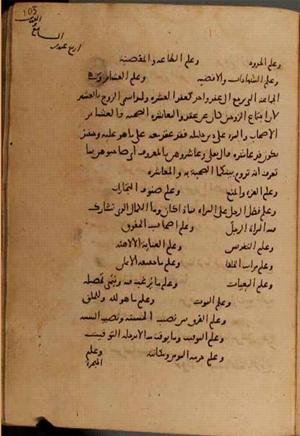
knowledge of limits; knowledge of obedience and disobedience; and knowledge of testimonies and judgments.
(Clans, Association, and Companionship)
Knowledge of clans, ʿashaʾir: a group referring back to a single knot, like the knot of ten, ʿashara. Hence a spouse is called ʿashīr, for the spouses’ union arose from a contract, ʿaqd. Association, muʿāshara, is companionship, so clans are companions. A person follows the religion of his intimate friend: he has bound himself to him according to what he is upon, and only then has he associated with him.
He Most High said, “Associate with them according to recognized good” [al-Nisa 4:19]: that is, keep company with them through what is known to make companionship and association between you endure. Knowledge of might and prevention; knowledge of kinds of commerce; and knowledge of what gives man superiority over woman, and what perfection woman shares with man.
(Faith, Providential Care, and the Ranks of Vicegerents)
Knowledge of those possessing rights; knowledge of sanctification; knowledge of divine providential care; knowledge of the ranks of vicegerents; knowledge of the reality of faith; knowledge of withnesses[93]; knowledge of what is desired and wished to be attained; knowledge of death; and knowledge of what belongs to God and to creation.
Knowledge of the difference between the portion of a good deed and the portion of an evil deed; knowledge of assigning times, and of what is timed as distinct from what admits no timing; knowledge of the believer’s inviolability and standing; knowledge of emigration;
Notes
[93]
(The reading maʿībāt, “blemishes,” with the letter ʿayn, occurs and has been retained as it stands.)
Translator’s note: The supplied body text reads maʿiyyāt, “withnesses,” while the original editorial note quotes a different spelling. Both have been retained.