The Meccan Revelations

Manuscript volume 24 · Page 5

Konya manuscript

Open Arabic sourceOpen English translation

Arabic

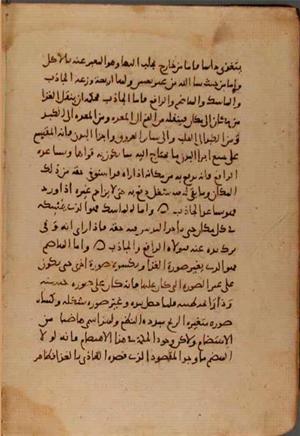
يتغذى دائما، فأما من خارج يجلب إليها وهو المعبر عنه بالأكل، وإما من حيث شاء الله من غير تعيين.

(الجاذب والماسك والهاضم والدافع)

ولها أربعة وزعة[2]: الجاذب، والماسك، والهاضم، والدافع.

فأما الجاذب فحكمه: أن ينقل الغذاء من مكان إلى مكان فينقله من الفم إلى المعدة، ومن المعدة إلى الكبد، ومن الكبد إلى القلب، وإلى سائر العروق وأجزاء البدن، فإنه المقسم على جميع أجزاء البدن ما يحتاج إليه مما يكون به قواها.

ويساعده الدافع فإنه يدفع به من مكانه، إذا رآه قد استوفى حقه من ذٰلك المكان، وما بقي له فيه شغل، دفع به حتى لا يزاحم غيره إذا ورد، فهو يساعد الجاذب.

وأما الماسك فهو الذي يمسكه في كل مكان، حتى يأخذ التدبير فيه حقه[3]، فإذا رأى أنه وفى حقه ترك يده عنه، فتولاه الدافع والجاذب.

وأما الهاضم فهو الذي يغير صورة الغذاء، ويكسوه صورة أخرى حتى يكون على غير الصورة التي كان عليها، فإنه كان على صورة حسنة وذا رائحة طيبة، فلما حصل بيده وغير صورة شكله، وكساه صورة متغيرة الريح مبددة النظم، ولهٰذا سمي هاضما من الاهتضام.

ولكن وجود الحكمة في هٰذا الاهتضام، فإنه لو لا الهضم ما وجد المقصود الذي قصده الغاذي بالغذاء، فظاهر

Notes

[2]

(الوزعة هنا القوى المعينة للنفس النباتية؛ ويسميها المؤلف ويفصل فعل كل واحدة منها في انتقال الغذاء وتدبيره.)

[3]

(أُثبتت «يأخذ» بمقابلة الطبعة الجديدة، بدل «بأخذ» في الملف السابق.)
English

to be nourished continually, either from outside through something brought to it, expressed as eating, or from wherever God wills, without specification.

(The Attracting, Retaining, Digesting, and Expelling Faculties)

It has four agents[2]: the attracting, retaining, digesting, and expelling faculties.

The attracting faculty's ruling is to transfer nourishment from place to place. It transfers it from the mouth to the stomach, from the stomach to the liver, from the liver to the heart, and to all the vessels and bodily parts. It distributes to all bodily parts what they need of that through which their strength subsists.

The expelling faculty assists it, pushing nourishment from its place when it sees that it has received its full due from that place and has no work remaining within it. It pushes it onward so that it will not crowd another when it arrives. It thus assists the attracting faculty.

The retaining faculty holds it within every place until governance receives its due within it[3]. When it sees that its due has been fulfilled, it releases its hand from it, and the expelling and attracting faculties take charge of it.

The digesting faculty changes nourishment's form and clothes it in another form, until it is no longer in its previous form. It had a beautiful form and a pleasant scent. When it came into this faculty's hand, it changed its shape's form and clothed it in a form altered in smell and dispersed in arrangement. Hence it is called digesting, hāḍim, from ihṭiḍām, breaking down.

Wisdom exists within this breaking down, however. Without digestion, the goal intended by the nourisher through nourishment would not occur. Outwardly

Notes

[2]

(The agents here are the faculties assisting the vegetative soul. The author names them and details the action of each in transferring and governing nourishment.)

[3]

(«يأخذ», ‘receives,’ was established by comparison with the new edition, instead of «بأخذ» in the preceding file.)

Manuscript imageManuscript volume 24 · Page 5

Arabic and English are linked by the same Konya page ID. Page alignment is approximate; consult the manuscript image for verification.

Cairo source reference

Ibn al-Arabi, The Meccan Revelations — Manuscript volume 24 · Page 5 — https://www.futmak.com/english/konya/pages.php?id=7145&text=both