
Futmak · الفتوحات المكية · Meccan Revelations

The Meccan Revelations

Manuscript volume 22 · Page 28

Konya manuscript

Open Arabic sourceOpen English translation

Arabic

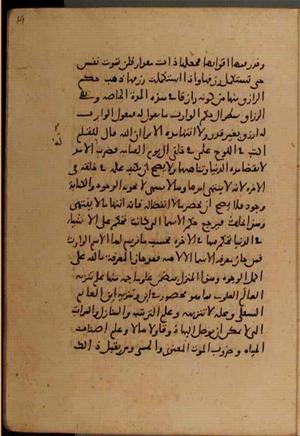
﴿وقَدَّرَ فِيها أَقْواتَها﴾ [فصلت: 10]، فجعلها ذات مقدار؛ فلن تموت نفس حتى تستكمل رزقها. وإذا استكملت رزقها ذهب حكم الرازق منها من كونه رازقا في هذه المدة الخاصة، وبقي الرزاق ينظر إلى حكم الوارث ما يقول له، فيقول الوارث له: «ارزق بغير قدر ولا انتهاء مدة».

(أمد الكتابة وحكم الأسماء)

أ لا ترى أن الله قال للقلم: «اكتب في اللوح علمي في خلقي إلى يوم القيامة»؟ فضرب له الأمد لانقضاء مدة الدنيا وتناهيها. ولا يصح أن يكتب علمه في خلقه في الآخرة لأنه لا ينتهي أمدها؛ وما لا ينتهي لا يحويه الوجود، والكتابة وجود، فلا يصح أن يحصر ما لا انقضاء له؛ فإنه انتهاء ما لا ينتهي، وهٰذا خلف. فيرجع حكم الأسماء التي كانت تحكم على الأشياء في الدنيا تحكم فيها في الآخرة بحسب ما يرسم لها الاسم الوارث. فمن حاز معرفة الأسماء الإلهية، فقد حاز المعرفة بالله على أكمل الوجوه.

(بقية علوم المنزل)

وهٰذا المنزل يتضمن علوما جمة؛ منها علم تنزيه العالم العلوي بما هو محصور في أين وتنزيه أين العالم السفلي ومحله، لا تنزيهه؛ وعلم الترتيب والمنازل والمراتب التي لا يمكن أن يوصل إليها ذوقا ولا حالا؛ وعلم أصناف الحياة وضروب الموت المعنوي والحسي ومن يقبل ذٰلك
English

“He determined its provisions within it” [Fussilat 41:10]? He made it possess a measure. No soul dies until it has received its provision in full. When it has received it in full, the Provisioner’s ruling leaves it insofar as He provides during this particular period. The Provider remains, looking to the Inheritor’s ruling to see what He tells Him. The Inheritor tells Him, “Provide without measure or any end to the period.”

(The Term of Writing and the Ruling of the Names)

Do you not see that God said to the Pen, “Write upon the Tablet My knowledge concerning My creation until the Day of Resurrection”? He assigned it a term because this world’s period expires and comes to an end. His knowledge concerning His creation in the Hereafter cannot be written, because its period has no end. What has no end cannot be encompassed by existence, and writing is existence. What has no cessation cannot be confined, for that would be the ending of what has no end, which is a contradiction. The names that ruled things in this world then return to ruling them in the Hereafter according to what the name the Inheritor prescribes for them. Whoever possesses gnosis of the divine names possesses gnosis of God in the most complete respects.

(The Remaining Sciences of the Abode)

This Abode contains many sciences: among them, knowledge of declaring the upper world transcendent insofar as it is confined in a “where,” and of declaring the lower world’s “where” and locus transcendent, rather than that world itself; knowledge of ordering, Abodes and ranks that cannot be reached through taste or state; and knowledge of the kinds of life and varieties of immaterial and sensory death, and who admits them as distinct from

Notes

Translator’s note TN6560-1: The Provisioner and the Provider distinguish the supplied forms al-Rāziq (الرازق) and al-Razzāq (الرزاق). The catalog’s phrase about declaring transcendence is compressed; the distinction between the lower world itself and its “where” or locus is retained.

Manuscript imageManuscript volume 22 · Page 28

Arabic and English are linked by the same Konya page ID. Page alignment is approximate; consult the manuscript image for verification.

Cairo source reference

Ibn al-Arabi, The Meccan Revelations — Manuscript volume 22 · Page 28 — https://www.futmak.com/english/konya/pages.php?id=6560&text=both