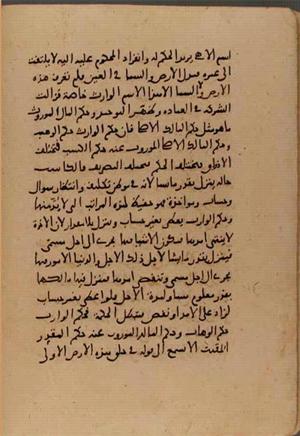
divine name wants the ruling to belong to it and the subject ruled to be exclusively directed toward it, looking to no other.
He therefore changes earth and heaven in their entity, so that this earth and heaven know only this name, the Inheritor, in particular. Association in worship disappears, and affirmation of oneness appears.
(The Inheritor, the Owner and the Difference in Giving)
The ruling of inherited wealth is not like the ruling of the original owner. The inheritor’s ruling is that of bestowal, whereas the ruling of the original owner from whom it is inherited is that of acquisition. The tastes differ, so the ruling differs, and the disposition differs.
The acquirer’s state is: “He sends down by measure what He wills” [al-Shura 42:27], for he is in an abode of obligation, awaiting a request, reckoning and being taken to task. He preserves these ranks, which are unavoidable.
The Inheritor’s ruling gives without reckoning and sends down without measure, because the Hereafter’s term never ends. Things there therefore run[4] to a specified term, and He sends down by measure what He wills on account of that term.
In this world, things run to a specified term and their duration ends. Their Owner therefore sends down within it according to a known measure equal to the term’s duration. Were He to give without reckoning, it would exceed or fall short of the duration, and wisdom would be nullified.
The Inheritor’s ruling is thus the ruling of the Bestower, while the ruling of the Owner from whom it is inherited is the ruling of the Determiner, the Nourisher. Do you not hear His saying concerning the creation of this first earth:
Notes
[4]
(The expression occurs in this form. The context contrasts the Hereafter, whose term does not end, with this world, whose term is limited.)