
Futmak · الفتوحات المكية · Meccan Revelations

The Meccan Revelations

Manuscript volume 22 · Page 27

Konya manuscript

Open Arabic sourceOpen English translation

Arabic

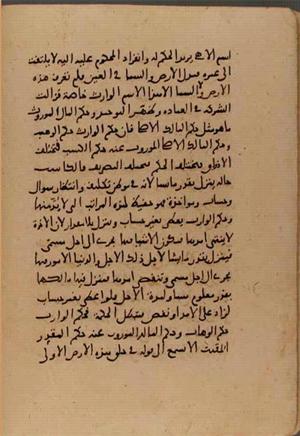
اسم إلهي يريد الحكم له وانفراد المحكوم عليه إليه، لا يلتفت إلى غيره.

فبدل الأرض والسماء في العين، فلم تعرف هذه الأرض ولا السماء إلا هٰذا الاسم الوارث خاصة، فزالت الشركة في العبادة وظهر التوحيد.

(الوارث والمالك واختلاف العطاء)

وحكم المال الموروث ما هو مثل حكم المالك الأصلي؛ فإن حكم الوارث حكم الوهب، وحكم المالك الأصلي الموروث عنه حكم الكسب؛ فتختلف الأذواق فيختلف الحكم فيختلف التصريف.

فالكاسب حاله: ﴿ينزل بقدر ما يشاء﴾ [الشورى: 27]؛ لأنه في موطن تكليف وانتظار سؤال وحساب ومؤاخذة، فهو حفيظ لهذه المراتب التي لا بد منها.

وحكم الوارث يعطي بغير حساب، وينزل بلا مقدار؛ لأن الآخرة لا ينتهي أمدها، فتكون الأشياء فيها تجري[4] إِلى أَجَلٍ مُسَمًّى، فينزل بِقَدَرٍ ما يَشاءُ لأجل ذٰلك الأجل.

والدنيا الأمور فيها تجري إلى أجل مسمى وينقضي أمدها، فينزل فيها مالكها بقدر معلوم مساو لمدة الأجل؛ فلو أعطى بغير حساب، لزاد على الأمد أو نقص، فتبطل الحكمة.

فحكم الوارث حكم الوهاب، وحكم المالك الموروث عنه حكم المقدر المقيت. أ لا تسمع إلى قوله في خلق هذه الأرض الأولى:

Notes

[4]

(هكذا وردت العبارة؛ والسياق يقابل بين الآخرة التي لا ينتهي أمدها والدنيا المحدودة الأجل.)
English

divine name wants the ruling to belong to it and the subject ruled to be exclusively directed toward it, looking to no other.

He therefore changes earth and heaven in their entity, so that this earth and heaven know only this name, the Inheritor, in particular. Association in worship disappears, and affirmation of oneness appears.

(The Inheritor, the Owner and the Difference in Giving)

The ruling of inherited wealth is not like the ruling of the original owner. The inheritor’s ruling is that of bestowal, whereas the ruling of the original owner from whom it is inherited is that of acquisition. The tastes differ, so the ruling differs, and the disposition differs.

The acquirer’s state is: “He sends down by measure what He wills” [al-Shura 42:27], for he is in an abode of obligation, awaiting a request, reckoning and being taken to task. He preserves these ranks, which are unavoidable.

The Inheritor’s ruling gives without reckoning and sends down without measure, because the Hereafter’s term never ends. Things there therefore run[4] to a specified term, and He sends down by measure what He wills on account of that term.

In this world, things run to a specified term and their duration ends. Their Owner therefore sends down within it according to a known measure equal to the term’s duration. Were He to give without reckoning, it would exceed or fall short of the duration, and wisdom would be nullified.

The Inheritor’s ruling is thus the ruling of the Bestower, while the ruling of the Owner from whom it is inherited is the ruling of the Determiner, the Nourisher. Do you not hear His saying concerning the creation of this first earth:

Notes

[4]

(The expression occurs in this form. The context contrasts the Hereafter, whose term does not end, with this world, whose term is limited.)

Manuscript imageManuscript volume 22 · Page 27

Arabic and English are linked by the same Konya page ID. Page alignment is approximate; consult the manuscript image for verification.

Cairo source reference

Ibn al-Arabi, The Meccan Revelations — Manuscript volume 22 · Page 27 — https://www.futmak.com/english/konya/pages.php?id=6559&text=both