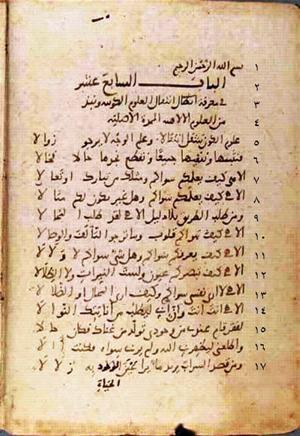
Chapter 17: On Knowing the Transitions of Cosmic Sciences, and Selections from the Original Divine Sciences That Sustain Them
The sciences of the cosmos pass from state to state,
while knowledge of the Face expects no passing away.
We affirm them all and negate them all,
and traverse their upland, state after state.
My God, how can any other than You know You?
Who, like You, is blessed or exalted?
My God, how can any other than You know You?
Can any other be a likeness of You?
Whoever seeks the way without a guide,
my God, has surely sought the impossible.
My God, how can hearts love You
without hoping for intimacy and union?
My God, how can any other than You recognize You?
Is there anything other than You? No, no, and no!
My God, how can eyes behold You,
when You are neither the luminous bodies nor the shadows?
My God, I do not see myself as other than You.
How could I see the impossible, or error?
My God, You are You; and my “I”
seeks the gift of Your “I-ness,”
because of a poverty that arose in me through my existence,
born of Your freedom from need, and so becoming a state.
He brought me forth to make me manifest to Him;
He did not see me as other than Him, so I was a mirage.
Whoever approaches the mirage seeking water
sees within it the spring of life, clear and sweet.
Notes
Translator’s note TN645-1: “My ‘I’” and “Your ‘I-ness’” retain the poem’s play on self-reference. The shift from addressing God as “You” to speaking of “He” is in the source. The compressed line concerning being seen as other than Him admits more than one vocalization; the translation gives a contextual reading, while “mirage” renders āl and prepares the following image.