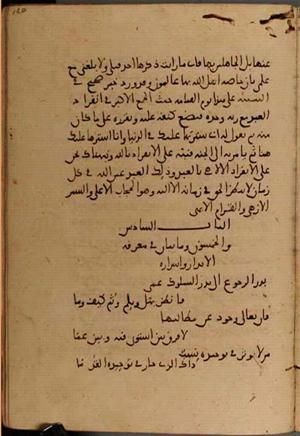
of it—indeed, ignorant of it.
I have seen no one mention it before me, nor heard of it, though knowing God’s particular elect know it. A sound report alerts to this on the Day of Resurrection, the greatest gathering, when the servant is alone with his Lord. He places His sheltering side over him and has him acknowledge what came from him, then says, “I concealed them for you within this world, and conceal them for you here,” and commands him to the Garden.
It alerts to being alone with God; we have alerted you to God’s being alone with the servant. That servant is God’s eye within every time. Within his time the Real looks only toward him. He is the highest veil, the brightest covering, and the most splendid curtain.
Chapter Two Hundred and Fifty-Six: On Gnosis of Becoming Full and Its Secrets
The full moon of returning to wayfaring’s full moon is blindness:
consider through “whether,” “why,” then “how” and “what.”
If existence transcends what these questions seek,
there is no difference within it between istawā and ʿamā.
One whose affirmation of oneness is unaffected by relations
is the One whose oneness bewildered the ancients.
Notes
Translator’s note TN5564-1: “God’s eye” renders ʿayn Allāh in the clause followed by His looking toward the servant. “God’s very entity” is another possible reading of ʿayn; the source’s veiling, being alone, and seeing imagery is preserved without resolving this into a new physical description.
Translator’s note TN5564-2: The supplied ʿamā, written عما, is retained in the poem. It may evoke the Cloud (ʿamāʾ) or blindness, particularly after the earlier عمى; the spelling does not settle this. Istawā means “was established” or “became level.” No hamza or different spelling has been silently supplied.