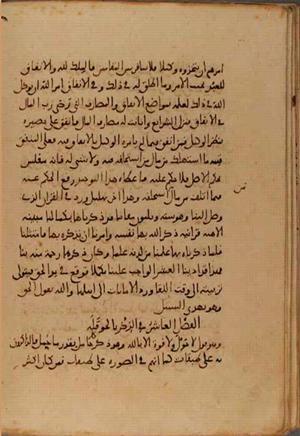
He commands them to take Him as agent. The two stations are not incompatible.
Ownership belongs to God, and expenditure to the servant according to the command and what He permits him within it. In expenditure God commands appointing God as agent, because He knows where spending belongs and the disbursements pleasing the property’s Lord. He sends down revealed laws, making property’s proper disbursements clear. The person spends with insight according to the Agent’s consideration.
Whoever spends where the Agent did not command expenditure owes the value of what he consumed from the property of the One who entrusted him with it. He possesses nothing, being bankrupt by his original ruling, so no ruling falls upon him. This affirmation therefore gives him the lifting of ruling concerning the property he destroyed of the One who appointed him its successor.
This is the last declaration of “no deity but God” occurring within the Qurʾan[34] that has reached us. It comprises thirty-six stations, which we have mentioned completely, explained as divine and Qurʾanic. Through them God remembered Himself and commanded us to remember Him, and we obeyed.
When we remembered Him through them, He taught us knowledge from His presence. Mentioning them was mercy toward us from Him. We have paid the obligatory tithe in full, and it falls into the Real’s hand, who undertakes its cultivation until the time of meeting and returning trusts to their people. “God speaks the truth and guides the way” [al-Ahzab 33:4].
Section Ten: Remembrance through the Hawqala
It is saying, “There is no might and no power except through God,” the remembrance of every bearer according to what he bears. Those remembering through it have levels, as they have levels in form. Whoever has more
Notes
[34]
(“Al-qarn” has been corrected to “al-Qurʾan” by comparison with the new edition.)