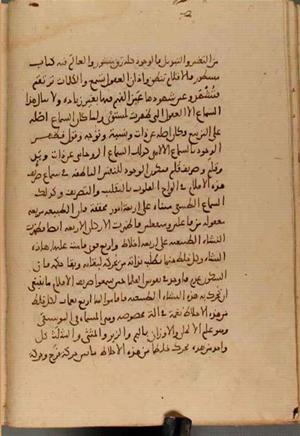
from alteration and change. All existence is an outspread parchment [drawn from al-Ṭūr 52:3], and the cosmos within it is an inscribed book [drawn from al-Ṭūr 52:2]. The pens speak, the ears of the intellects listen, and the words are inscribed and witnessed. The very witnessing of them is the very understanding within them, without addition. This listening is attained only by the intellects that have [risen] to a level.
Since listening is originally fourfold, arising from an essence, a relation, a turning toward, and speech, existence appeared through divine listening. Likewise, spiritual listening arises from an essence, a hand, a pen, and the scratching of a pen. Existence thus comes to the rational soul through hearing the scratching of these pens upon the tablets of hearts, through turning and directing.
(Natural Listening and the Effect of Melodies)
Natural listening likewise rests upon four established things. Nature is fourfold, understood as two active and two passive factors. It also brought forth the four elements. The natural constitution thus appeared with four humors and four faculties upon which this constitution stands. Each humor, through its essence, seeks something to set it in motion, for its own continuance and that of its governing property, since stillness is nonexistence.
When the learned heard the scratching of the pens, He brought into being within their souls that by which this natural constitution should be moved. They established four melodies for it, a melody for each of these humors, upon a particular instrument. In music—the science of melodies and meters—these are called the bamm, the zīr, the mathnā, and the mathlath.[12] Each of these sets one of these humors in motion, between a movement of joy and a movement of
Notes
[12]
(The author names these four in his musical illustration, pairing each with one of the four humors mentioned above.)
Translator’s note TN4801-1: The phrase is al-ʿuqūl allatī ẓaharat li-mustawī. Its final word and construction are unvocalized; the rendering takes it as reaching a level or plane of hearing, rather than identifying an additional person.