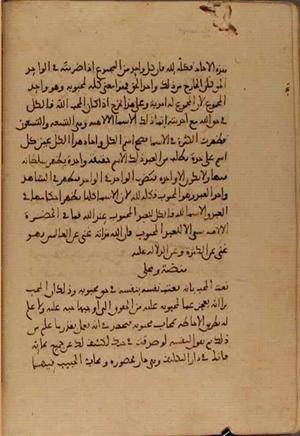
these individual units, so his entirety belongs to God. If you multiply each one of the aggregate by the One, the Real, the product is the Real’s one. This is the meaning of his belonging wholly to his beloved. He is the aggregate’s one, for the aggregate has an oneness.
This is how it is understood when God is the lover. The all, in God’s case despite His oneness, is the divine names, the ninety-nine. Multiplicity appears in the names, and the name “all” is valid. The units of this all are the entity of each name separately. That name demands of the servant one reality in which its authority appears; it can only be one. The one is multiplied by the one, and in the witnessed there appears the servant’s one, who is the beloved.
His entirety belongs to God, for all the names manifest their rulings in the servant, and the names belong to God. The all thus belongs to the servant beloved by God. Nothing in the divine Presence is for anyone but the beloved servant, “for God,” in His Essence, “is Independent of the worlds.” He is independent of multiplicity and of indication of Him.
A Dais and a Locus of Self-Disclosure
The Lover Is Described as Reproaching Himself by Himself concerning His Beloved
The lover sees himself as incapable of fulfilling his beloved’s rights over him, which his love has made obligatory for him. He has no encompassing knowledge of what his beloved loves, so he strives to act according to what he knows of it.
Then he says to himself, “Were you truthful in your love, all that he loves would have been unveiled to you. You are in the abode of obligation, a bounded abode, and the Beloved’s objects of love within it are
Notes
Translator’s note TN4759-1: “The Real’s one” (wāḥid al-Ḥaqq) and “the servant’s one” (wāḥid al-ʿabd) retain the genitival expressions. The stated product changes as the exposition shifts between the servant as lover and God as lover.