
Futmak · الفتوحات المكية · Meccan Revelations

The Meccan Revelations

Manuscript volume 16 · Page 52

Konya manuscript

Open Arabic sourceOpen English translation

Arabic

إلا في حق نفسه؛ هكذا تعطيه المحبة.

كان لبعض الملوك مملوك يحبه اسمه إياس، فدخل على الملك بعض جلسائه ورأى قدمي المملوك في حجر الملك والملك يكبسهما فتعجب فقال إياس: يا هٰذا، ما هذه أقدام إياس؛ هذه قلب الملك في حجره يكبسه.

هٰذا معنى قولنا إن المحب في حق نفسه يسعى؛ فإنه له في ذٰلك الفعل لذة عظيمة لا ينالها إلا بذٰلك الفعل فالمحبوب ممتن عليه إذا أمكنه مما تقع للمحب به لذة من المحبوب.

فيرى المحب أي شيء جاء من المحبوب، فهو كثير، فهو إنعام سيد على عبد وأي شيء كان من المحب في حق المحبوب ولو كان تلف الروح والمهجة في رضاه، لكان قليلا؛ لأنه طاعة عبد لسيد محسان، «وما قدروا الله حق قدره» [الأنعام: ٩١]. فالمحبوب غني، فقليله كثير، والمحب فقير، فكثيره قليل.

ولكن وإن كان هٰذا نعت المحب عندهم فهو نعت محب ناقص المعرفة، كثير الحب على عماية؛ لأن المحب إذا كان المخلوق ليس له شيء يملكه حتى يستقل أو يستكثر.

وأما إذا كان المحب (هو) الله فإنه يستكثر القليل من عبده وهو قوله: ﴿فَاتَّقُوا الله ما اسْتَطَعْتُمْ﴾ [التغابن: ١٦]، و﴿لا يُكَلِّفُ الله نَفْساً إِلَّا وُسْعَها﴾ [البقرة: ٢٨٦].

وأما استقلاله الكثير في حق أحبابه من عباده، فإن ما عند الله ما له نهاية ودخول ما لا نهاية له في الوجود محال وكل ما دخل في الوجود فهو متناه
English

only for his own right. This is what love gives him.

One king had a slave he loved, named Iyās. One of his courtiers entered upon the king and saw the slave’s feet in the king’s lap, with the king massaging them. He was astonished. Iyās said, “Man, these are not Iyās’s feet: this is the king’s heart in his lap, which he is massaging.”

This is what we mean by the lover striving for his own sake. In that act he has a great pleasure attainable only through that act, so the beloved bestows a favor upon him by enabling what gives the lover pleasure from the beloved.

The lover regards whatever comes from the beloved as much, a master’s favor upon a servant. Whatever comes from the lover for the beloved, even the loss of life and heart’s blood for his good pleasure, he would consider little, for it is a servant’s obedience to an abundantly beneficent master. “They have not measured God with His true measure” [al-Anʿam 6:91]. The beloved is independent, so his little is much; the lover is poor, so his much is little.

Although they consider this a lover’s description, it is the description of a lover deficient in gnosis, with much love in blindness, for the lover, if a creature, possesses nothing to consider little or much.

When God is the lover, He regards His servant’s little as much, as in His saying, “Be Godwary as much as you can” [al-Taghabun 64:16], and “God charges no soul beyond its capacity” [al-Baqara 2:286].

As for His considering much little in relation to His beloved servants, what is with God has no end. The entrance of the infinite into existence is impossible, and everything that enters existence is finite,

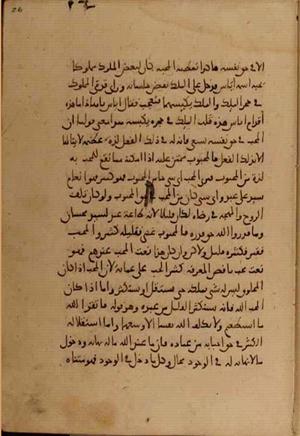
Manuscript imageManuscript volume 16 · Page 52

Arabic and English are linked by the same Konya page ID. Page alignment is approximate; consult the manuscript image for verification.

Cairo source reference

Ibn al-Arabi, The Meccan Revelations — Manuscript volume 16 · Page 52 — https://www.futmak.com/english/konya/pages.php?id=4746&text=both