The Meccan Revelations

Manuscript volume 14 · Page 156

Konya manuscript

Open Arabic sourceOpen English translation

Arabic

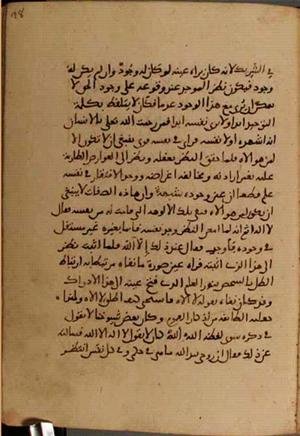
في الشريك، لأنه كان يراه عينه، لو كان له وجود، وإن لم يكن له وجود، فيكون نظر الموجَد عند وقوعه على وجود الحق، لا يتمكن أن يرى مع هٰذا الوجود عدما، فكان لا يتلفظ بكلمة التوحيد أبدا، ولا يرى نفسه أبدا.

فمن رحمة الله تعالى بالإنسان، أنه أشهده أولا نفسه، فرأى في نفسه قوى ينبغي أن لا تكون إلا لمن هو إله، فلما حقق النظر بعقله، ونظر إلى العوارض الطارئة عليه بغير إرادته، ومخالفة أغراضه، ووجد الافتقار في نفسه، علم قطعا إن عين وجوده شبهة، وأن هذه الصفات لا ينبغي أن تكون لمن هو إله، فنفى تلك الألوهة التي قامت له من نفسه، فقال: لا إله.

ثم إنه لما أمعن النظر، وجد نفسه قائما بغيره، غير مستقل في وجوده، فأوجب، فقال: عند ذٰلك إلا الله.

فلما أثبت، نظر إلى هٰذا الذي أثبته، فرآه عين صورة ما نفاه، مرتبطا به ارتباط الظل بالشخص، بنور العلم الذي فتح عينه إلى هٰذا الإدراك، وقد كان نفاه بقوله لا إله، فاستحى كيف أطلق لا إله، ولهٰذا جعلته طائفة من أذكار العموم.

(حكاية في ذكر الاسم المفرد)

وكان بعض شيوخنا لا يقول في ذكره سوى لفظة الله الله، كان لا يقول لا إله إلا الله.

فسألته عن ذٰلك، فقال: إن روحي بيد الله، ما هي في حكمي، وفي كل نفس أنتظر
English

in the partner, for he would have seen Him as its very entity, if it had existence. Even if it had no existence, the created being’s gaze, upon falling upon the Real’s existence, could not see nonexistence alongside this existence. He would never utter the profession of oneness, nor ever see himself.

From God the Exalted’s mercy toward the human being, He first made him witness himself. Within himself he saw powers that should belong only to one who is a deity. When he considered carefully through his intellect, looked upon the incidents coming upon him without his will and contrary to his aims, and found need within himself, he knew decisively that his very existence was an ambiguity. These attributes should not belong to one who is a deity. He therefore negated the divinity that had arisen for him from himself and said, “There is no god.”

Then, when he considered more deeply, he found himself subsisting through another, not independent in existence. He affirmed and said at that point, “except God.”

Having affirmed, he looked toward what he had affirmed and saw it as the very form of what he had negated, linked to it as shade is linked to a person, through the light of knowledge that opened his eye to this perception. He had negated it through saying, “There is no god,” so he felt modesty over having uttered “There is no god.” For this reason a group made it one of the common people’s remembrances.

(An Account Concerning Remembrance through the Single Name)

One of our shaykhs said nothing in his remembrance but “God, God.” He did not say, “There is no god but God.”

I asked him about this. He said, “My spirit is in God’s hand, not under my control. In every breath I await

Notes

Translator’s note TN4218-1: The discussion preserves the sequence ‘There is no god’ followed by ‘except God.’ It treats negation and affirmation through the originated being’s nonexistence and received existence, rather than replacing the sequence with a single undivided formula.

Manuscript imageManuscript volume 14 · Page 156

Arabic and English are linked by the same Konya page ID. Page alignment is approximate; consult the manuscript image for verification.

Cairo source reference

Ibn al-Arabi, The Meccan Revelations — Manuscript volume 14 · Page 156 — https://www.futmak.com/english/konya/pages.php?id=4218&text=both