The Meccan Revelations

Manuscript volume 14 · Page 155

Konya manuscript

Open Arabic sourceOpen English translation

Arabic

بِسْمِ اللهِ الرَّحْمٰنِ الرَّحِيمِ

فصل

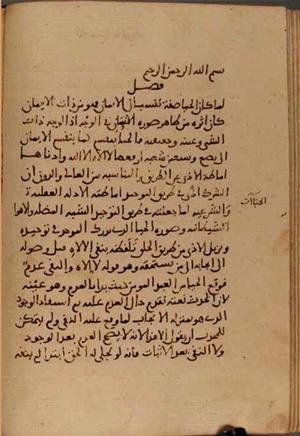
لما كان الحياء صفة تنسب إلى الايمان، فهو من ذات الايمان، كان أثره من ظاهر صورة الإنسان في الوجه، إذ الوجه ذات الشيء وعينه وحقيقته.

فالحياء ينقسم كما ينقسم الايمان إلى بضع وسبعين شعبة، أرفعها لا إله إلا الله، وأدناها إماطة الأذى عن الطريق.

والمناسبة بين العالي والدون، أن الشرك أذى في طريق التوحيد، إماطته الأدلة العقلية، والإنباءات الشرعية، لما جعلته في طريق التوحيد الشبه المضلة والأهواء الشيطانية.

(الحياء في كلمة التوحيد)

وصورة الحياء الذي يدرك الموحد في توحيده، ويزيل الأذى من طريق الخلق تلفظه بنفي الإله، قبل وصوله إلى إيجابه إلى من يستحقه، وهو قوله لا إله، والنفي عدم، فوقع الحياء من العبد المؤمن، حيث بدأ بالعدم، وهو عينه، لأن المحدث نعته تقدم حال العدم عليه، ثم استفاد الوجود، الذي هو بمنزلة الإيجاب، لما وقع عليه النفي.

ولم يتمكن للمحدث أن يقول إلا هٰذا، لأنه لا يصح العدم بعد الوجود، ولا النفي بعد الإثبات، فإنه لو تجلى له الحق ابتداء، لم ينفه
English

In the name of God, the All-Merciful, the Most Merciful.

Section

Since modesty is an attribute related to faith and belongs to faith’s very essence, its effect appears in the human being’s outward form upon the face. A thing’s face is its essence, entity, and reality.

Modesty is divided as faith is divided, into seventy-odd branches. The highest is “There is no god but God,” and the lowest is removing harm from the road.

The correspondence between the highest and lowest is that associating partners is harm upon the path of affirming oneness. Rational proofs and revealed reports remove it, because misleading ambiguities and satanic desires placed it upon that path.

(Modesty in the Profession of Oneness)

The form of modesty overtaking the affirmer of oneness in his affirmation, and the one removing harm from creation’s path, is his uttering the negation of deity before reaching its affirmation for the One entitled to it: his saying, “There is no god.” Negation is nonexistence. Modesty arises in the believing servant because he began with nonexistence, his own entity, for the originated being is described by a state of nonexistence preceding it. Then he acquires existence, which occupies the position of affirmation for what negation had touched.

The originated being can say only this, because nonexistence is not valid after existence, nor negation after affirmation. Had the Real disclosed Himself to him initially, he would not have negated Him

Manuscript imageManuscript volume 14 · Page 155

Arabic and English are linked by the same Konya page ID. Page alignment is approximate; consult the manuscript image for verification.

Cairo source reference

Ibn al-Arabi, The Meccan Revelations — Manuscript volume 14 · Page 155 — https://www.futmak.com/english/konya/pages.php?id=4217&text=both