The Meccan Revelations

Manuscript volume 14 · Page 86

Konya manuscript

Open Arabic sourceOpen English translation

Arabic

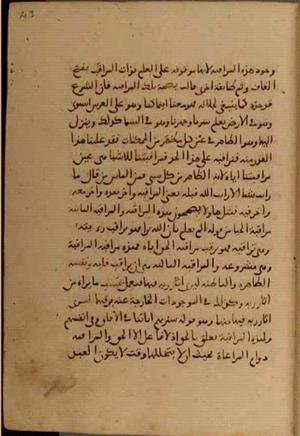
وجود هذه المراقبة، لأنها موقوفة على العلم بذات المراقب، بفتح القاف[26].

وثم طائفة أخرى قالت بصحة تلك المراقبة، فإن الشرع قد حدد، كما ينبغي لجلاله، فهو معنا أينما كنا، وهو ﴿عَلَى الْعَرْشِ اسْتَوى﴾ [طه: 5]، وهو في الأرض يعلم سرنا وجهرنا، وهو في السماء كذٰلك، وينزل إليها، وهو الظاهر في عين كل مظهر من الممكنات، فقد علمنا هٰذا القدر منه، فنراقبه على هٰذا الحد، فمراقبتنا للأشياء هي عين مراقبتنا إياه، لأنه الظاهر من كل شيء.

فمن الناس من قال: «ما رأيت شيئا إلا رأيت الله قبله»، يعني المراقبة، وآخر بعده، وآخر معه، وآخر فيه، فمثل هٰؤلاء يصححون هذه المراقبة.

والمراقبة الثانية مراقبة الحياء، من قوله: ﴿أَ لَمْ يَعْلَمْ بِأَنَّ الله يَرى﴾ [العلق: 14]، فهو يراقب رؤيته، وهي تراقبه، فهو يرقب مراقبة الحق إياه، فهذه مراقبة المراقبة، وهي مشروعة.

والمراقبة الثالثة، هي أن يراقب قلبه ونفسه الظاهرة والباطنة، ليرى آثار ربه فيها، فيعمل بحسب ما يراه من آثار ربه، وكذٰلك في الموجودات الخارجة عنه، يرقبها، ليرى آثار ربه فيها منها، وهو قوله: ﴿سَنُرِيهِمْ آياتِنا في الْآفاقِ وفي أَنْفُسِهِمْ﴾ [فصلت: 53]، ولهذه المراقبة تعلق بالحق، إذ لا فاعل إلا الحق.

و المراقبة دوام المراعاة، بحيث أن لا يتخللها وقت لا يكون العبد

Notes

[26]

(يضبط المؤلف «المراقَب» اسم مفعول؛ فالبحث في إمكان مراقبة من لا يحاط بذاته، ثم يذكر قولا آخر يتعلق بما ورد من أوصافه.)
English

that this watchfulness should exist, for it depends upon knowing the essence of the one watched, murāqab, with a fatḥa on the qāf.[26]

Another group affirms this watchfulness’s validity. Revealed law has set bounds as befits His majesty: He is with us wherever we are; He “settled upon the Throne” [Ta Ha 20:5]; He is upon earth, knowing our secret and open speech, and likewise in heaven, and descends to it. He is manifest within the entity of every locus of manifestation among possible things. We know this much of Him, and watch Him according to this bound. Our watchfulness over things is our very watchfulness over Him, for He is what is manifest from everything.

Someone says, “I saw nothing without seeing God before it,” meaning watchfulness; another after it, another with it, another within it. People such as these affirm this watchfulness.

The second watchfulness is that of modesty, from His saying, “Does he not know that God sees?” [al-ʿAlaq 96:14]. The servant watches His seeing, while that seeing watches him. He observes the Real’s watchfulness over him. This is watchfulness of watchfulness, and it is prescribed.

The third watchfulness is watching his heart and outward and inward self to see his Lord’s effects within them, acting according to what he sees of his Lord’s effects. Likewise with existent things outside himself: he watches them to see his Lord’s effects within and from them. It is His saying, “We shall show them Our signs in the horizons and within themselves” [Fussilat 41:53]. This watchfulness has an attachment to the Real, since no agent exists but the Real.

Watchfulness is perpetual attentiveness, without a moment intervening when the servant is not

Notes

[26]

(The author vocalizes murāqab as a passive participle. The discussion concerns whether one whose essence cannot be encompassed may be watched; he then mentions another view concerning the descriptions transmitted of Him.)

Manuscript imageManuscript volume 14 · Page 86

Arabic and English are linked by the same Konya page ID. Page alignment is approximate; consult the manuscript image for verification.

Cairo source reference

Ibn al-Arabi, The Meccan Revelations — Manuscript volume 14 · Page 86 — https://www.futmak.com/english/konya/pages.php?id=4148&text=both