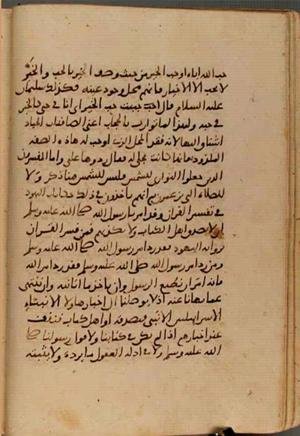
God’s love for it, or the love belonging to good insofar as good is described by love. Good loves only the good, for they are the locus of its entity’s existence. Likewise Solomon, peace be upon him, said, “I loved the love of good”: that is, in my love I am like good in its love. For this reason, when they “disappeared behind the veil” [Sad 38:32]—I mean “the standing, swift horses” [Sad 38:31]—he longed for them, having lost the locus that gave him this delightful attribute. They were a place of self-disclosure for him, so he said, “Return them to me” [Sad 38:33].
As for the commentators who made the disappearance refer to the sun, the sun is not mentioned here, nor the prayer they claim. They then take Jewish accounts in interpreting the Qurʾan, although the Messenger of God, God bless him and grant him peace, commanded us neither to affirm nor deny the People of the Book.
Whoever interprets the Qurʾan through Jewish reports has rejected the Messenger of God’s command. Whoever rejects the Messenger’s command rejects God’s command, for He commanded us to obey the Messenger, take what he brings us, and refrain from what he forbids us. Accounts of these Israelite prophets reach us only through a prophet, whom we affirm, or through People of the Book, whose reports we suspend judgment upon when nothing in our Book, our Messenger’s saying, or rational proofs either refutes or establishes them,