The Meccan Revelations

Manuscript volume 14 · Page 78

Konya manuscript

Open Arabic sourceOpen English translation

Arabic

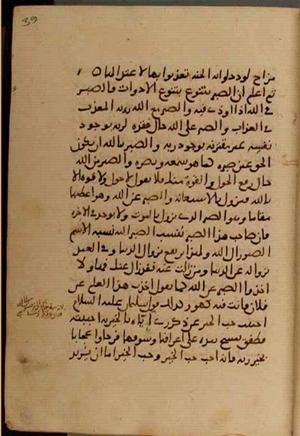
مزاج لو دخلوا به الجنة، تعذبوا بها، لاعتدالها.

(أنواع الصبر بحسب حروف الإضافة)

ثم اعلم: أن الصبر يتنوع بتنوع الأدوات، فالصبر في الله إذا أوذى فيه، والصبر مع الله رؤية المعذب في العذاب، والصبر على الله حال فقده لربه بوجود نفسه غير مقترنة بوجود ربه.

والصبر بالله أن يكون الحق عين صبره، كما هو سمعه وبصره والصبر من الله حال رفع الحول والقوة منك، فلا تقول لا حول ولا قوة إلا بالله، فيزول بالاستعانة.

والصبر عن الله، وهو أعظمها مقاما، وهو الصبر الذي يزول بالموت، ولا يوجد في الآخرة، فإن صاحب هٰذا الصبر ينسب الصبر إليه نسبة الاسم الصبور إلى الله، ولهٰذا يرتفع بزوال الدنيا، وفي العبد بزواله عن الدنيا، ومن زلت عنه فقد زال عنك.

(معنى الصبر عن الله واعتبار قصة سليمان)

فهٰؤلاء أخذوا الصبر عن الله[25]، كما تقول: «أخذت هٰذا العلم عن فلان»، فأنت فيه كهو، وكذلك قول سليمان ع: ﴿أَحْبَبْتُ حُبَّ الْخَيْرِ عَنْ ذِكْرِ رَبِّي﴾ [ص: 32]، لأنه سماه خيرا، والخير منسوب إلى الله، فقال: عن ذكر ربي إياه بالخيرية أحببته.

فطفق يمسح بيده على أعرافها وسوقها، فرحا وإعجابا بخير ربه، فإنه أحب حب الخير، وحب الخير، إما أن يريد

Notes

[25]

(يفسر «عن» هنا بمعنى الأخذ والتلقي، كما يقال أخذ العلم عن فلان؛ ويصرح بعد ذلك بأنه لا يريد الصبر على مفارقة الله.)
English

if they entered the Garden with it, they would be tormented by it because of its temperateness.

(The Kinds of Patience According to Relational Particles)

Know, then, that patience varies with the particles. Patience in God is when one is harmed for His sake. Patience with God is seeing the tormentor in the torment. Patience toward God is the state of losing one’s Lord through the existence of one’s self, unaccompanied by the existence of one’s Lord.

Patience through God is the Real’s being one’s patience itself, just as He is one’s hearing and sight. Patience from God is the state of might and power being removed from you, so that you do not say, “There is no might and no power except through God,” for it ceases through seeking help.

Patience received from God is the greatest in station. It is the patience that ceases with death and does not exist in the Hereafter. Its possessor ascribes patience to himself as the name the Patient is ascribed to God. For this reason it passes away with the passing away of this world, and in the servant with his departure from this world. Whoever you have left behind has left you behind.

(The Meaning of Patience Received from God and the Inward Application of Solomon’s Story)

These have received patience from God,[25] just as you say, “I received this knowledge from so-and-so”: you are in it as he is. Likewise Solomon, peace be upon him, said, “I loved the love of good from my Lord’s mention” [Sad 38:32]. He called it good, and good is ascribed to God. He thus said: I loved it from my Lord’s mentioning it as good.

He began stroking their manes and shins with his hand, rejoicing in and admiring his Lord’s good. He loved the love of good. This love of good may intend

Notes

[25]

(Here he interprets ʿan as taking and receiving, as one says that knowledge is taken from someone. He later states explicitly that he does not mean patience in separation from God.)

Translator’s note TN4140-1: The prepositional distinctions are fī, ‘in’; maʿa, ‘with’; ʿalā, rendered ‘toward’; bi-, ‘through’; min, ‘from’; and ʿan, rendered ‘received from.’ In the last and in Solomon’s verse, the explanation takes ʿan as reception from a source, not separation or neglect.

Manuscript imageManuscript volume 14 · Page 78

Arabic and English are linked by the same Konya page ID. Page alignment is approximate; consult the manuscript image for verification.

Cairo source reference

Ibn al-Arabi, The Meccan Revelations — Manuscript volume 14 · Page 78 — https://www.futmak.com/english/konya/pages.php?id=4140&text=both