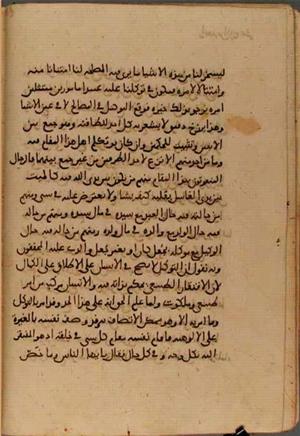
to subject to us such things as He sees to contain our welfare, as gracious favour from Him and compliance with His command. In trusting Him we are servants commanded and obeying His command, hoping thereby for His good.
The delegation therefore concerns welfare, rather than the entities of things. This is a subtle isthmus whose delicacy not everyone perceives, combining the two and establishing both rulings. Although the people of this station have discussed it, each inclines toward one side without combining them. Among the men described by this station, some are before God like the dead before the washer, who turns him as he wills without his objecting to anything. Others are like a servant with his master concerning his master's property; others like a child with his parent concerning his parent's property; and others like an agent with the one appointing him, whether for payment or without payment.
(Natural Need and the Limit of Trust)
The position of the realized, which we maintain, is that trust cannot be entirely and perfectly realized in the human being, because natural need rules within him by its own essence. The human being is compounded of a natural matter and one belonging to the unseen dominion.
When the Real knew that he is of this character, yet commanded trust—and He commands only what one can be qualified by—and had described Himself as jealous over divinity, He placed Himself in the position of everything within His creation, since He is the One needed in every respect and every state. He said, “O people,” without singling out
Notes
Translator’s note TN4113-1: Trust, tawakkul, is developed through the vocabulary of appointing an agent, tawkil. The four comparisons distinguish the dead before a washer, a servant, a child, and a paid or unpaid agent; the author then introduces natural need as a limit upon complete trust.