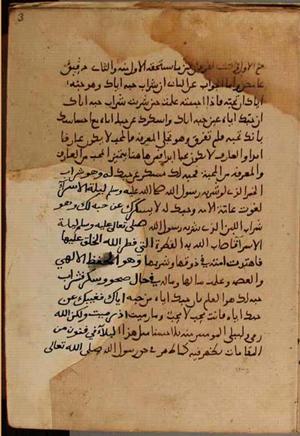
encompassing both the first and second, with a fine and subtle distinction between what belongs to the first and what belongs to the second.
As for the answer to the second: the drink of His loving you is that you love Him; this is His loving you. When you love Him, you know, upon drinking the drink of His loving you, that your loving Him is His very loving you. It intoxicates you away from your loving Him while you sense that you love Him, and you make no distinction. This is the self-disclosure of knowledge. The lover is never a knower, and the knower never a lover.
Here the lover is distinguished from the knower, and knowledge from love. His love for you intoxicates you away from your love for Him. This is the drink of wine which, had the Messenger of God, may God bless him and grant him peace, drunk it on the night of the Night Journey, would have led the community at large astray. Your love for Him does not intoxicate you away from His love for you. This is the drink of milk that the Messenger of God, may God bless him and grant him peace, drank on the night of the Night Journey. Through it God brought him to the primordial nature upon which God originated creatures. His community was therefore guided in its tasting and drinking, which is divine preservation and protection. It knew what belonged to it and what belonged to Him, in sobriety and intoxication.
The drink of His love for you is thus the knowledge that your love for Him comes from His love for you, making you absent from your love for Him. You are a lover and no lover. “You did not throw when you threw, but God threw, that He might try the believers with a good trial from Him” [al-Anfal 8:17]. A trial like this appears in various stations, as it appeared concerning the Messenger of God, may God bless him and grant him peace,
Notes
Translator’s note TN3760-1: The milk clause’s compressed Arabic, fa-aṣāba Allāhu bihi al-fiṭrah, is rendered as God bringing him through it to primordial nature. The contrasting wine and milk readings, and the explicit separation of lover and knower, remain the author’s account.