
Futmak · الفتوحات المكية · Meccan Revelations

The Meccan Revelations

Manuscript volume 9 · Page 86

Konya manuscript

Open Arabic sourceOpen English translation

Arabic

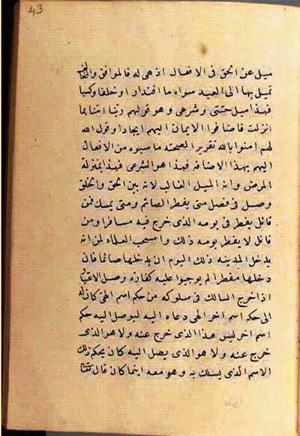
ميل عن الحق في الأفعال، إذ هي له، والموافق والمخالف يميل بها إلى العبد، سواء مال اقتدارا أو خلقا أو كسبا؛ فهٰذا ميل حسي وشرعي، وهو قولهم: ﴿رَبَّنا آمَنَّا بِما أَنْزَلْتَ﴾ [آل عمران: ٥٣].

فأضافوا الايمان إليهم إيجادا، وقول الله لهم: «آمنوا بالله» [النساء: ١٣٦] (هو) تقرير لصحة ما نسبوه من الأفعال إليهم بهذه الإضافة. فهٰذا هو الشرعي، فهٰذا بمنزلة المرض وأنه الميل الغالب؛ لأنه بين الحق والخلق.

وصل في فصل متى يفطر الصائم ومتى يمسك؟

فمن قائل: يفطر في يومه الذي خرج فيه مسافرا؛ ومن قائل: لا يفطر يومه ذٰلك. واستحب العلماء لمن علم أنه يدخل المدينة ذٰلك اليوم أن يدخلها صائما؛ فإن دخلها مفطرا لم يوجبوا عليه كفارة.

وصل الاعتبار

إذا خرج السالك في سلوكه من حكم اسم إلهي كان له، إلى حكم اسم آخر إلهي دعاه إليه ليوصله إليه حكم اسم آخر ليس هو الذي خرج عنه ولا هو الذي يصل إليه، كان بحكم ذٰلك الاسم الذي يسلك به، وهو معه أينما كان. قال تعالى: ﴿
English

an inclination away from the Real in respect of acts, which belong to Him. Both those who agree and those who differ incline with them toward the servant, whether as exercising power, creating, or acquiring. This is an inclination apprehended by the senses and established by revelation, as in their words, “Our Lord, we believe in what You have sent down” [Al ʿImran 3:53].

They attributed bringing faith into being to themselves. God’s saying to them, “Believe in God” [al-Nisaʾ 4:136], affirms the soundness of this attribution of acts to themselves. This is the revealed aspect. It stands in the place of illness and is the prevailing inclination, because it is between the Real and creation.

Continuation on When the Person Fasting Breaks the Fast and When He Abstains

Some say he breaks the fast on the day he departs to travel. Others say he keeps the fast that day. The scholars recommended that someone who knows he will enter the city that day enter it fasting. If he enters with his fast broken, they impose no expiation upon him.

Continuation on the Inward Application

When the wayfarer leaves the rule of a divine name in his journey to enter the rule of another divine name that has called him, a third name’s rule brings him to it. This name is distinct from both the one he leaves and the one he reaches. He is under the rule of the name through which he journeys, which is with him wherever he may be. He, exalted is He, says, “

Notes

Translator’s note TN2610-1: Exercising power, creating, and acquiring are alternative terms in accounts of human acts. The author’s point here is the common inclination to attribute acts to the servant.

Manuscript imageManuscript volume 9 · Page 86

Arabic and English are linked by the same Konya page ID. Page alignment is approximate; consult the manuscript image for verification.

Cairo source reference

Ibn al-Arabi, The Meccan Revelations — Manuscript volume 9 · Page 86 — https://www.futmak.com/english/konya/pages.php?id=2610&text=both