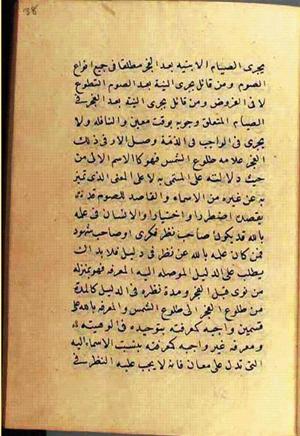
no fast is valid without an intention before dawn, in every kind of fasting without qualification. Others say an intention after dawn suffices for voluntary fasting but excludes obligatory fasts. Others say an intention after dawn suffices for a fast whose obligation is tied to a specified time and for voluntary fasting, while excluding an obligation outstanding as a personal liability.
Continuation on the Inward Application
Dawn is a sign of sunrise. It is thus like the divine name insofar as it indicates the One named, apart from the meaning distinguishing it from the other names.
The person intending to fast may intend it under compulsion or by choice. In knowing God, a human being may be one who engages in rational reflection or one who witnesses.
Someone whose knowledge of God comes through considering evidence must seek the evidence leading him to knowledge. He is like someone who intends before dawn, and his period of considering the evidence is like the period from dawn to sunrise.
Knowledge of God is of two kinds. One is obligatory, such as knowing His oneness in His divinity.
The other is knowledge that is not obligatory, such as knowing how the names that indicate meanings relate to Him. He has no obligation to investigate