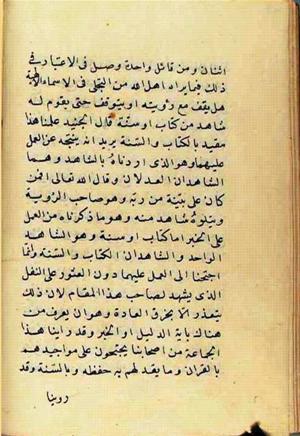
two, and some one.
Continuation. The Inward Application of This
Concerning the self-disclosure that the people of God see in the divine names, should a person stand by his seeing, or wait until a witness from the Book or the Sunna is established for him?
Al-Junayd said, “This knowledge of ours is bound by the Book and the Sunna.” He meant that it results from acting upon them. This is what we intend by the witness, and they are the two upright witnesses.
God Most High says, “Is someone who stands upon a clear proof from his Lord” [Hud 11:17], namely the person with the vision, “and a witness from Him follows it,” which is what we have mentioned of acting upon the transmitted report, whether the Book or the Sunna. This is the single witness. The two witnesses are the Book and the Sunna.
We have inclined toward acting upon them[12], as distinct from finding a transmitted text that bears witness to the person in this station, because the latter is difficult except through a breaking of the ordinary course. He is made aware from there, through the extraordinary, of the verse serving as proof or of the report.
We have seen this among some of our companions. They support their experiences with the Quran without having previously memorized it, and with the Sunna. We have
Notes
[12]
(The author explains the binding of knowledge to the Book and the Sunna as its being the fruit of acting upon them. Here he distinguishes this from finding a transmitted text that bears witness to the experience after it has occurred.)