
Futmak · الفتوحات المكية · Meccan Revelations

The Meccan Revelations

Manuscript volume 9 · Page 33

Konya manuscript

Open Arabic sourceOpen English translation

Arabic

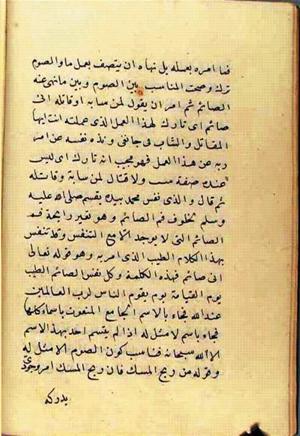
فما أمره بعمل، بل نهاه أن يتصف بعمل ما، والصوم ترك؛ فصحت المناسبة بين الصوم وبين ما نهي عنه الصائم.

ثم أمر أن يقول لمن سابه أو قاتله: «إني صائم»، أي: تارك لهٰذا العمل الذي عملته أنت أيها المقاتل والساب، في جانبي فنزه نفسه عن أمر ربه عن هٰذا العمل؛ فهو مخبر أنه تارك، أي: ليس عنده صفة سب ولا قتال لمن سابه وقاتله.

(خلوف الصائم واختلاف إدراك الروائح)

ثم قال: «والذي نفس محمد بيده»، يقسم صلى الله عليه وسلم: «لخلوف فم الصائم» وهو تغير رائحة فم الصائم، التي لا توجد إلا مع التنفس. وقد تنفس بهٰذا الكلام الطيب الذي أمر به وهو قوله: «إني صائم».

فهذه الكلمة، وكل نفس الصائم، أطيب يوم القيامة ﴿يَوْمَ يَقُومُ النَّاسُ لِرَبِّ الْعالَمِينَ﴾ [المطففين: ٦] عند الله. فجاء بالاسم الجامع المنعوت بالأسماء كلها، فجاء باسم لا مثل له؛ إذ لم يتسم أحد بهٰذا الاسم إلا الله سبحانه، فناسب كون الصوم لا مثل له.

وقوله: «من ريح المسك»، فإن ريح المسك أمر وجودي
English

He commands him no deed, but forbids him to assume a particular deed. Fasting is abstention, so the correspondence between fasting and what the fasting person is forbidden to do is established.

Then he commands him to say to anyone who insults or fights him, “I am fasting.” That is, I abstain from this deed that you, the one fighting and insulting, have directed against me. By his Lord’s command he keeps himself free of this deed. He reports that he abstains, meaning that he bears no attribute of insulting or fighting in response to someone who insults or fights him.

(The Fasting Person’s Breath and the Different Perceptions of Odors)

Then he says, “By the One in whose hand is Muhammad’s soul.” He swears, may God bless him and grant him peace, concerning “the changed breath of the fasting person’s mouth,” the change in its smell that occurs only with breathing. He has breathed out the good words he was commanded to say, “I am fasting.”

These words, and every breath of the fasting person, are more fragrant with God on the Day of Resurrection, “the day when people rise for the Lord of the worlds” [al-Mutaffifin 83:6]. He uses the all-embracing Name, described by all the names. He thus uses a Name with no likeness, for no one has been named by it but God, glory be to Him. This corresponds to fasting’s having no likeness.

His words “than the fragrance of musk” concern an existent thing,

Manuscript imageManuscript volume 9 · Page 33

Arabic and English are linked by the same Konya page ID. Page alignment is approximate; consult the manuscript image for verification.

Cairo source reference

Ibn al-Arabi, The Meccan Revelations — Manuscript volume 9 · Page 33 — https://www.futmak.com/english/konya/pages.php?id=2557&text=both