
Futmak · الفتوحات المكية · Meccan Revelations

The Meccan Revelations

Manuscript volume 7 · Page 304

Konya manuscript

Open Arabic sourceOpen English translation

Arabic

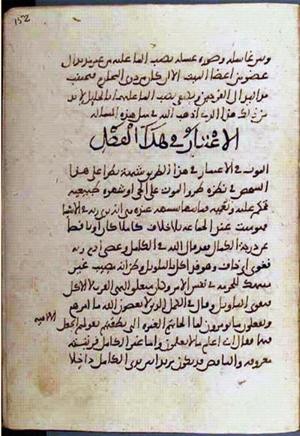
وبين غاسله، وصورة غسله بصب الماء عليه من غير مد يد إلى عضو من أعضاء الميت، إلا، إن كان من ذوي المحارم، فيجتنب مد اليد إلى الفرجين، ويكتفي بصب الماء عليهما، بالحائل، لا بد من ذٰلك، هٰذا الذي أذهب إليه في مثل هذه المسألة.

الاعتبار في هٰذا الفصل

الموت في الاعتبار في هٰذا الطريق (هو) شبهة تطرأ على هٰذا الشخص، في نظره طرو الموت على الحي، أو شهوة طبيعية تحكم عليه وتعميه، فيأتيها بشبهة عنده، هي أنه يرى ربه في الأشياء، فهو ميت عند الجماعة بلا خلاف، كاملا كان، أو ناقصا عن درجة الكمال.

فقد قال الله في الكامل: ﴿وعَصى آدَمُ رَبَّهُ فَغَوى﴾ [طه: ١٢١]، أي خاف[92]، وهو قد أكل بالتأويل، وظن أنه مصيب غير منتهك للحرمة في نفس الأمر، وكان متعلق النهي القرب، لا الأكل، فيقوي التأويل.

وقال في الكمل الذين ﴿لا يَعْصُونَ الله ما أَمَرَهُمْ ويَفْعَلُونَ ما يُؤْمَرُونَ﴾ [التحريم: ٦]، لما ألجأتهم الغيرة الإلهية التي نطقتهم بقولهم: ﴿أَ تَجْعَلُ فِيها﴾، فقال: ﴿إِنِّي أَعْلَمُ ما لا تَعْلَمُونَ﴾ [البقرة: ٣٠].

وأما غير الكامل، فرتبته معروفة، والناقص قد يكون مريدا بين يدي الكامل داخلا

Notes

[92]

(ورد تفسير «فغوى» بلفظ «خاف» في الملف؛ أُبقي اللفظ دون تصحيح تخميني.)
English

and the person washing. The washing is done by pouring water over the deceased without extending a hand to any part of the body. If the washer is a relative forbidden in marriage, however, he avoids touching the two private parts and confines himself to pouring water over them with a barrier. This is indispensable. This is my position in such a case.

The Inward Application of This Section

Death, in the inward application on this path, is a doubt that comes upon a person in his reflection, as death comes upon the living. Or a natural appetite takes control of him and blinds him, so that he acts on it under a doubtful justification of his own, namely that he sees his Lord in things. For the community he is then dead, without disagreement, whether he is complete or below the degree of completeness.

God said of the complete person, “Adam disobeyed his Lord and went astray” [Ta Ha 20:121], that is, he feared.[92] He ate on the basis of interpretation, believing himself right and believing that in reality he was not violating the prohibition. The prohibition concerned approaching, rather than eating, which strengthens the interpretation.

Concerning the complete beings who “do not disobey God in what He commands them and do what they are commanded” [al-Tahrim 66:6], when divine jealousy impelled them to say, “Will You place in it,” He said, “I know what you do not know” [al-Baqarah 2:30].

As for the incomplete person, his degree is known. The incomplete person may be a disciple in the presence of the complete person, entering

Notes

[92]

(The file glosses fa-ghawā, “went astray,” with khāfa, “feared.” The wording has been retained without conjectural correction.)

Translator’s note TN2198-1: The doubtful justification is the inward counterpart of death. Adam’s interpretation and the angels’ question show how the author applies this image even to beings he calls complete.

Manuscript imageManuscript volume 7 · Page 304

Arabic and English are linked by the same Konya page ID. Page alignment is approximate; consult the manuscript image for verification.

Cairo source reference

Ibn al-Arabi, The Meccan Revelations — Manuscript volume 7 · Page 304 — https://www.futmak.com/english/konya/pages.php?id=2198&text=both