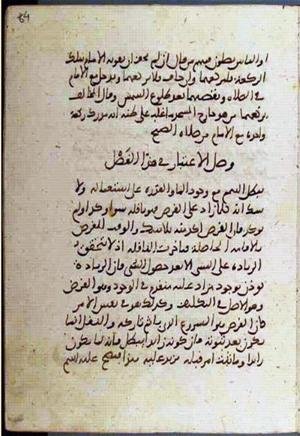
or the people praying. Some say that if he does not fear missing that unit with the prayer leader, he should pray the two units. If he fears missing it, he should leave them, join the prayer leader, and make up the two units after sunrise.
The opposing view is that a person outside the mosque should pray the two units as long as he thinks it most likely that he will catch one unit of the dawn prayer with the prayer leader.
Continuation on the Inward Application of This Section
Dry ablution becomes invalid when water is available and one can use it. Everything beyond the obligatory prayer is undoubtedly voluntary, whether emphatically recommended or otherwise. The obligation is unquestionably more emphatic. Once the call to begin has sounded, the time belongs to the obligatory prayer, so the voluntary prayer comes after it. An addition to a thing is realized only once the thing itself has come about.
An addition indicates something to which it is added, prior in existence. That is the obligation, which is the basis of legal responsibility.
So it is in reality. The obligatory act is what is prescribed such that omitting it incurs sin. A voluntary act comes only after the obligation has been established. Otherwise its status as an addition falls away. How can it be additional if nothing has been established before it for this act to add to, so that it can properly be called
Notes
Translator’s note TN2062-1: The wording of the final argument is compressed and syntactically irregular. The translation follows its stated premise that an addition presupposes something to which it is added. The Arabic nafl, voluntary observance, also conveys an addition.