
Futmak · الفتوحات المكية · Meccan Revelations

The Meccan Revelations

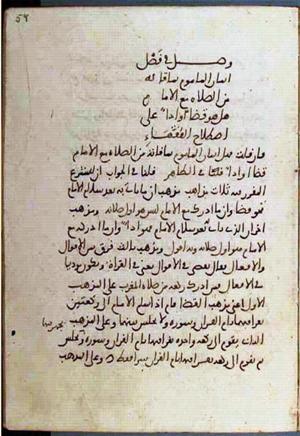
Manuscript volume 7 · Page 116

Konya manuscript

Open Arabic sourceOpen English translation

Arabic

وصل في فصل إتيان المأموم بما فاته من الصلاة مع الإمام هل هو قضاء أو أداء على اصطلاح الفقهاء؟

فإن قلت فهل إتيان المأموم بما فاته من الصلاة مع الإمام، قضاء أو أداء في الظاهر[48]؟ قلنا في الجواب: إن للشرع المقرر فيه ثلاثة مذاهب:

مذهب أن ما يأتي به بعد سلام الإمام، فهو قضاء، وأن ما أدرك مع الإمام ليس هو أول صلاته.

ومذهب آخر أن الذي يأتي به بعد سلام الإمام، فهو أداء وأن ما أدركه مع الإمام هو أول صلاته، وبه أقول.

ومذهب ثالث، فرق بين الأقوال والأفعال، فقال يقضي في الأقوال، يعني في القراءة، ويكون مؤديا في الأفعال.

فمن أدرك ركعة من صلاة المغرب على المذهب الأول، أعني مذهب القضاء، قام إذا سلم الإمام إلى ركعتين، يقرأ فيهما بأم القرآن وسورة، ولا يجلس بينهما.

وعلى المذهب الثاني يقوم إلى ركعة واحدة، يقرأ فيها بأم القرآن وسورة، يجهر فيها، ويجلس، ثم يقوم إلى ركعة، يقرأ فيها بأم القرآن، سرا فقط.

وعلى المذهب

Notes

[48]

(استُكمل التقابل إلى «قضاء أو أداء في الظاهر» بمقابلة الطبعة الأحدث.)
English

Continuation on Whether What the Follower Missed with the Imam Is Made Up or Performed, in the Jurists’ Terminology

If you ask whether in the outward ruling the follower makes up the part of the prayer he missed with the imam or performs it,[48] we reply that there are three legal positions on the matter.

One position is that what he does after the imam’s salutation is making up the prayer. The part he caught with the imam is not the beginning of his prayer.

Another position is that what he does after the imam’s salutation is performing the prayer, and the part he caught with the imam is the beginning of his prayer. This is my view.

A third position distinguishes the utterances from the acts. It holds that he makes up the utterances, meaning the recitation, and performs the acts.

Under the first position, that of making up the prayer, if someone catches one unit of the sunset prayer, he rises after the imam’s salutation for two units. He recites the Mother of the Quran and a surah in each, without sitting between them.

Under the second position, he rises for one unit in which he recites the Mother of the Quran and a surah aloud, then sits. He then rises for another unit and quietly recites only the Mother of the Quran.

Under the

Notes

[48]

(The contrast has been completed to read “makes it up or performs it in the outward ruling” by comparison with the newer edition.)

Translator’s note TN2010-1: Qaḍāʾ, “making up,” treats the units caught with the imam as the end of the follower’s prayer and supplies the omitted earlier units afterward. Adāʾ, “performing,” treats what the follower caught as the beginning and completes the remaining units in order. The mixed position applies the distinction separately to what is recited and what is done.

Manuscript imageManuscript volume 7 · Page 116

Arabic and English are linked by the same Konya page ID. Page alignment is approximate; consult the manuscript image for verification.

Cairo source reference

Ibn al-Arabi, The Meccan Revelations — Manuscript volume 7 · Page 116 — https://www.futmak.com/english/konya/pages.php?id=2010&text=both