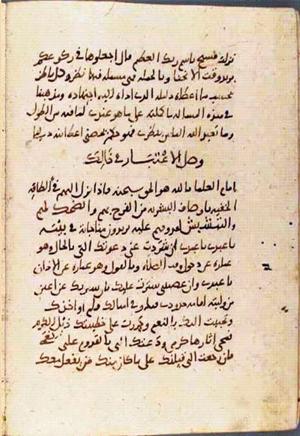
“Glorify the name of your Lord, the Tremendous” [al-Waqiʿah 56:74] was revealed, he said, “Use it in your bowing,” meaning when you bend.
In sum, the question calls for inquiry. Each inquirer proceeds according to what the proof to which his independent judgment led him affords him. I have not set out my own position on this question in full as I understand it, because of its length. God has not made my reasoning binding on people. It is a ruling specific to me, which my proof gave me.
Continuation on the Inward Application
(Divine Gentleness and the Servant’s Affirmation of Incomparability)
The imam of those who know God is the Real, glory be to Him. He comes down to them in His hidden acts of gentleness with human attributes, rejoicing in them, laughing for them, and welcoming them warmly when they come to Him wishing to converse intimately with Him in His house.
O My servant, O My servant, if you stray from Me, I call you to Me by a circumstance, namely the arrival of the time of prayer, and by words, namely the call to prayer.
O My servant, even if you disobey Me, I cover for you by concealing you from the eyes of those I appointed to enforce My prescribed penalties on you and those like you. I do not call you to account. I endear Myself to you through blessings and draw the hem of generosity over your offense, so that My generosity erases its traces. I invite you to come to Me by coming to My blessings. If you return to Me, I accept you despite what you have done. Who would do
Notes
Translator’s note TN2003-1: The unvocalized qabiltuka in the final paragraph is read as “I accept you.” The supplied text spells the preceding word ilā, which normally means “to,” but the context calls for ilayya, “to Me.” The translation accordingly reads, “If you return to Me, I accept you.”