
Futmak · الفتوحات المكية · Meccan Revelations

The Meccan Revelations

Manuscript volume 7 · Page 79

Konya manuscript

Open Arabic sourceOpen English translation

Arabic

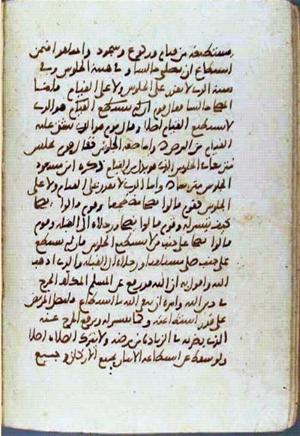
يستطيعه، من قيام، وركوع وسجود، واختلفوا فيمن استطاع أن يصلي جالسا، وفي هيأة الجلوس، وفي هيأة الذي لا يقدر على الجلوس ولا على القيام.

فأما المصلي جالسا، فقال قوم هو الذي لا يستطيع القيام أصلا؛ وقال قوم هو الذي يشق عليه القيام من المرض.

وأما صفة الجلوس، فقال قوم يجلس متربعا في الجلوس الذي هو بدل من القيام، وكره ابن مسعود الجلوس متربعا.

وأما الذي لا يقدر على القيام ولا على الجلوس، فقوم قالوا يصلي مضطجعا، وقوم قالوا يصلي كيف تيسر له، وقوم قالوا يصلي ورجلاه إلى القبلة، وقوم قالوا يصلي على جنب من لا يستطيع الجلوس، فإن لم يستطع على جنب صلى مستلقيا ورجلاه إلى القبلة.

(بقاء التكليف بحسب الاستطاعة)

والذي أذهب إليه وأقول به إن الله قد رفع عن المسلم المكلف الحرج في دين الله، وأمره أن يتقي الله ما استطاع، فليصل المريض على قدر استطاعته، وكما تيسر له، ويرفع الحرج عنه الذي يضر به في الزيادة من مرضه.

ولا يترك الصلاة أصلا، ولو سقط عن استطاعة الإتيان بجميع الأركان، وجميع
English

perform of standing, bowing, and prostration. They disagreed about who may pray seated, about the seated posture, and about the posture of one who can neither sit nor stand.

As for praying seated, some say this applies to one who cannot stand at all, and some say it applies to one whose illness makes standing difficult.

As for the posture of sitting, some say he sits cross-legged when sitting in place of standing. Ibn Masʿūd deemed sitting cross-legged reprehensible.

As for one who can neither stand nor sit, some say he prays lying down, some say he prays in whatever way is possible for him, and some say he prays with his feet toward the qibla. Some say one who cannot sit prays on his side. If he cannot do so, he prays on his back with his feet toward the qibla.

(The Obligation Remains in Proportion to Capacity)

My position is that God has removed hardship from the accountable Muslim in the religion of God and commanded him to be mindful of God to the extent he can. The sick person should therefore pray to the extent of his capacity, in whatever way is possible for him. He is relieved of hardship that would harm him by worsening his illness.

He does not leave off prayer altogether, even if he can perform none of its integral acts and meet none of

Manuscript imageManuscript volume 7 · Page 79

Arabic and English are linked by the same Konya page ID. Page alignment is approximate; consult the manuscript image for verification.

Cairo source reference

Ibn al-Arabi, The Meccan Revelations — Manuscript volume 7 · Page 79 — https://www.futmak.com/english/konya/pages.php?id=1973&text=both