
Futmak · الفتوحات المكية · Meccan Revelations

The Meccan Revelations

Manuscript volume 7 · Page 53

Konya manuscript

Open Arabic sourceOpen English translation

Arabic

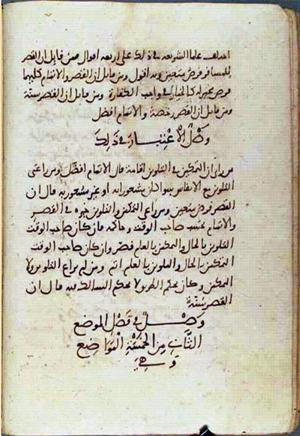
اختلف علماء الشريعة في ذٰلك على أربعة أقوال: فمن قائل إن القصر للمسافر فرض متعين، وبه أقول؛ ومن قائل إن القصر والإتمام كليهما فرض مخير له، كالخيار في واجب الكفارة؛ ومن قائل إن القصر سنة؛ ومن قائل إن القصر رخصة، والإتمام أفضل.

وصل الاعتبار في ذٰلك

من رأى أن التمكين في التلوين[28] إقامة، قال الإتمام أفضل.

ومن راعى التلوين مع الأنفاس، سواء كان مشعورا به، أو غير مشعور به، قال إن القصر فرض متعين.

ومن راعى التمكين والتلوين، خيره في القصر والإتمام، بحسب صاحب الوقت وحاكمه، فإن كان صاحب الوقت التلوين بالحال، والتمكين بالعلم، قصر، وإن كان صاحب الوقت التمكين بالحال، والتلوين بالعلم، أتم.

ومن لم يراع التلوين ولا التمكين، وكان بحكم الطريق، لا بحكم السالك فيه، قال إن القصر سنة.

وصل في فصل الموضع الثاني من الخمسة المواضع و هي

Notes

[28]

(التمكين هنا ثبات العارف في شهود تبدل الأحوال؛ والتلوين اختلافها مع الأنفاس. وتفصيل الفقرة يميز ما يكون بالحال مما يكون بالعلم.)
English

The scholars of the revealed Law differed on this in four ways. Some say that shortening is an individually specified obligation for the traveler, and I take this view. Some say that shortening and performing in full are both obligatory with a choice between them, like the choice in an obligatory expiation. Some say that shortening is a sunna. Others say that shortening is a concession and that performing in full is preferable.

Continuation. The Inward Application of This

Whoever sees stability amid variation[28] as residence says that performing in full is preferable.

Whoever takes account of variation with the breaths, whether or not it is perceived, says that shortening is an individually specified obligation.

Whoever takes account of both stability and variation gives the wayfarer a choice between shortening and performing in full, according to what presides over the moment and governs it. If variation in state and stability in knowledge preside over the moment, he shortens. If stability in state and variation in knowledge preside over the moment, he performs in full.

Whoever takes account of neither variation nor stability and follows the ruling of the path, independently of the one who travels it, says that shortening is a sunna.

Continuation on the Second of the Five Points, Which Is

Notes

[28]

(Stability here is the constancy of the knower in witnessing the change of states. Variation is their changing with the breaths. The rest of the paragraph distinguishes what occurs in state from what occurs in knowledge.)

Manuscript imageManuscript volume 7 · Page 53

Arabic and English are linked by the same Konya page ID. Page alignment is approximate; consult the manuscript image for verification.

Cairo source reference

Ibn al-Arabi, The Meccan Revelations — Manuscript volume 7 · Page 53 — https://www.futmak.com/english/konya/pages.php?id=1947&text=both