
Futmak · الفتوحات المكية · Meccan Revelations

The Meccan Revelations

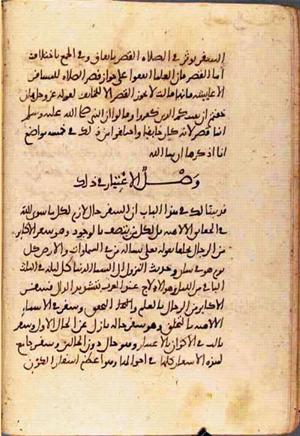
Manuscript volume 7 · Page 51

Konya manuscript

Open Arabic sourceOpen English translation

Arabic

السفر يؤثر في الصلاة القصر باتفاق[26]، وفي الجمع باختلاف.

أما القصر، فإن العلماء اتفقوا على جواز قصر الصلاة للمسافر، إلا عائشة، فإنها قالت لا يجوز القصر إلا للخائف لقوله عز وجل: ﴿إِنْ خِفْتُمْ أَنْ يَفْتِنَكُمُ الَّذِينَ كَفَرُوا﴾ [النساء: ١٠١]، وقالوا إن النبي صلى الله عليه وسلم إنما قصر لأنه كان خائفا، واختلفوا من ذٰلك في خمسة مواضع، أنا أذكرها إن شاء الله.

وصل الاعتبار في ذٰلك

قد بينا لك في هٰذا الباب أن السفر حال لازم لكل ما سوى الله في الحقائق الإلهية، بل لكل من يتصف بالوجود، وهو سفر الأكابر من الرجال، تخلقا بقوله تعالى: ﴿يَسْئَلُهُ من في السَّماواتِ والْأَرْضِ كُلَّ يَوْمٍ هُوَ في شَأْنٍ﴾ [الرحمن: ٢٩]، وحديث النزول إلى السماء الدنيا كل ليلة في الثلث الباقي من الليل، وهو الإدّلاج عند العرب، بتشديد الدال[27].

(مراتب السفر)

فسفر الأكابر من الرجال بالعلم والتحقق و سفر في الأسماء الإلهية بالتخلق، وهو سفر حاله نازل عن الحال الأول، وسفر ثالث في الأكوان بالاعتبار، وهو حال دون الحالين، وسفر جامع لهذه الأسفار كلها في أحوالها، وهو أعظم أسفار الكون،

Notes

[26]

(صُححت «باتفاق» بمقابلة الطبعة الأحدث؛ ثم يذكر المؤلف مواضع الاختلاف في الجمع.)

[27]

(يضبط المؤلف اللفظ هنا بالتشديد، فيُقرأ «الادِّلاج» على ما صرّح به؛ ثم ينقل اعتبار السفر إلى مراتب العلم والتخلق.)
English

Travel permits shortening the prayer, by agreement[26]. There is disagreement about its effect on combining.

As for shortening, the scholars agree that a traveler may shorten his prayer, with the exception of ʿĀʾishah, who said that shortening is permissible only for someone in fear, on account of His words, mighty and majestic, “If you fear that those who disbelieve may put you to trial” [al-Nisaʾ 4:101]. They said that the Prophet, may God bless him and grant him peace, shortened the prayer only because he was in fear. They differed on five points concerning this, which I shall mention, God willing.

Continuation. The Inward Application of This

We have explained to you in this chapter that travel in the divine realities is an inescapable state for everything other than God, indeed for all that is described by existence. This is the travel of the greatest of the spiritual men, embodying the character indicated by the words of the Most High, “Whoever is in the heavens and the earth asks of Him. Every day He is engaged in a matter” [al-Rahman 55:29], and by the hadith of the descent to the lowest heaven every night in the final third of the night. This is what the Arabs call iddilāj, with a doubled dāl[27].

(Degrees of Travel)

The travel of the greatest spiritual men is through knowledge and realization. There is also travel in the divine names through taking on their character traits, a travel whose state ranks below the first. A third travel is through engendered beings by way of inward application, a state below the other two. There is a travel that brings together all these journeys in their respective states, and it is the greatest of the journeys of engendered existence,

Notes

[26]

(The text was corrected to “by agreement” by comparison with the newer edition. The author then mentions the points of disagreement about combining.)

[27]

(The author specifies the doubled consonant here, so that the word is read iddilāj, as he explicitly states. He then carries the inward application of travel into the degrees of knowledge and of taking on character traits.)

Translator’s note TN1945-1: Iddilāj means traveling late at night. Here it links the final part of the night with the report of the divine descent.

Manuscript imageManuscript volume 7 · Page 51

Arabic and English are linked by the same Konya page ID. Page alignment is approximate; consult the manuscript image for verification.

Cairo source reference

Ibn al-Arabi, The Meccan Revelations — Manuscript volume 7 · Page 51 — https://www.futmak.com/english/konya/pages.php?id=1945&text=both