
Futmak · الفتوحات المكية · Meccan Revelations

The Meccan Revelations

Manuscript volume 7 · Page 50

Konya manuscript

Open Arabic sourceOpen English translation

Arabic

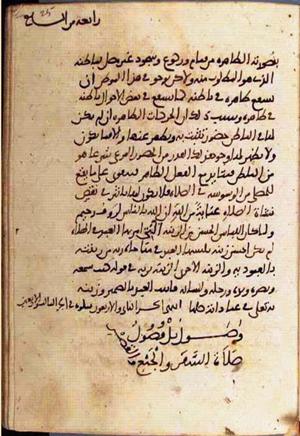
بصورته الظاهرة، من قيام وركوع وسجود، غير مصل بباطنه، الذي هو المطلوب منه، ولكن نرجو في هٰذا الموطن أن يشفع ظاهره في باطنه[25]، كما يشفع في بعض الأحوال باطنه في ظاهره.

(الحضور الباطن وأثره في الفعل الظاهر)

وسبب ذٰلك أن الحركات الظاهرة إن لم يكن لها في الباطن حضور تثبت به ويظهر عنها، وإلا فما تكون، ولا يظهر لها وجود، فذٰلك القدر من الحضور المرعى شرعا هو من الباطن، فيتأيد مع الفعل الظاهر، فيتقوى على ما يقع للمصلي من الوسوسة في الصلاة، فلا يكون لها تأثير في نقص نشأة الصلاة، عناية من الله ﴿إِنَّ الله بِالنَّاسِ لَرَؤُفٌ رَحِيمٌ﴾ [البقرة: ١٤٣].

ولما كان اللباس الحسن من الزينة التي أمر بها العبد في الصلاة، لم يكن أحسن زينة يلبسها العبد في مناجاة ربه من زينته بالعبودية، والزينة الأخرى الزينة بربه في قوله: «كنت سمعه وبصره ويده ورجله ولسانه»، فأثبت العبد بالضمير، وزينه به تعالى في عباداته كلها.

انتهى الجزء الثاني والأربعون، يتلوه في الجزء الثالث والأربعين.

الجزء الثالث والأربعون من الفتوحات المكِّيّة

وصول بل فصول صلاة السفر والجمع والقصر

Notes

[25]

(يشرح المؤلف رجاء هذه الشفاعة بقدر الحضور الذي لا تنفك عنه الحركة الظاهرة؛ فالتفصيل اللاحق يبين وجه عبارته.)
English

in his outward form, standing, bowing, and prostrating, while inwardly failing to pray, though the inward prayer is what is required of him. In this situation, however, we hope that his outward form intercedes for his inward state[25], just as in some states his inward state intercedes for his outward form.

(Inward Presence and Its Effect on Outward Action)

The reason is that the outward movements require an inward presence to establish them and from which they appear. Otherwise they could not come to be or manifest any existence. The degree of presence that the revealed Law takes into account thus belongs to the inward state. It is reinforced by the outward act and grows strong enough to withstand what comes upon the person praying of whispering during prayer, so that this has no effect in diminishing the form of the prayer, through God’s solicitude. “God is truly kind and merciful toward people” [al-Baqarah 2:143].

Since fine clothing is among the adornments commanded of the servant in prayer, there is no finer adornment for the servant to wear in intimate discourse with his Lord than his servanthood. The other adornment is that he is adorned by his Lord, in His words, “I was his hearing, his sight, his hand, his foot, and his tongue.” He thus affirmed the servant by the pronoun and adorned him with Himself, exalted is He, in all his acts of worship.

End of Part Forty-Two. It is followed by Part Forty-Three.

Part Forty-Three of the Meccan Revelations

Continuations, or Rather Sections, on the Traveler’s Prayer, Combining, and Shortening

Notes

[25]

(The author explains the hope for this intercession in terms of the degree of presence inseparable from the outward movement. The explanation that follows clarifies the basis of his statement.)

Manuscript imageManuscript volume 7 · Page 50

Arabic and English are linked by the same Konya page ID. Page alignment is approximate; consult the manuscript image for verification.

Cairo source reference

Ibn al-Arabi, The Meccan Revelations — Manuscript volume 7 · Page 50 — https://www.futmak.com/english/konya/pages.php?id=1944&text=both