
Futmak · الفتوحات المكية · Meccan Revelations

The Meccan Revelations

Manuscript volume 7 · Page 7

Konya manuscript

Open Arabic sourceOpen English translation

Arabic

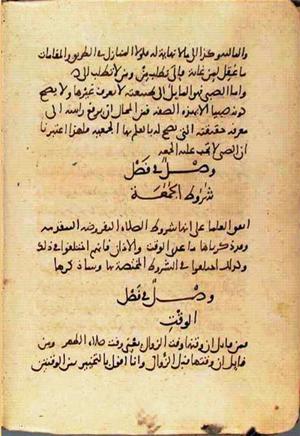
والثالثة، وكذا إلى ما لا نهاية له، فلو لا المنازل في الطريق والمقامات ما عقل لمن غاية، فإلى تطلب من ومن لا تطلب إلى[4].

وأما الصبي فهو المائل إلى طبيعته، لا يعرف غيرها، ولا يصح كونه صبيا إلا بهذه الصفة، فمن المحال أن يرفع رأسه إلى معرفة حقيقته التي تصح له بالعلم بها الجمعية، فلهٰذا اعتبرنا أن الصبي لا تجب عليه الجمعة.

وصل في فصل شروط الجمعة

اتفق العلماء على أنها شروط الصلاة المفروضة المتقدمة، وقد ذكرناها، ما عدا الوقت والأذان، فإنهم اختلفوا في ذٰلك، وكذٰلك اختلفوا في الشروط المختصة بها، وسأذكرها.

وصل في فصل الوقت

فمن قائل إن وقتها وقت الزوال، يعني وقت صلاة الظهر؛ ومن قائل إن وقتها قبل الزوال، وأنا أقول بالتخيير بين الوقتين.

Notes

[4]

(الحديث هنا عن دلالة حرفي الابتداء والانتهاء: تُفهم الغاية باعتبار ابتداء يسبقها، أما الابتداء فلا يستلزم تعيّن غاية نهائية.)
English

the third, and so on without end. Were it not for the stopping places and stations on the path, no end would be intelligible for “from.” “To” calls for “from,” whereas “from” does not call for “to”[4].

As for the child, he corresponds to one who inclines to his nature and knows nothing else. He is a child only by virtue of this characteristic. It is impossible for him to raise his head to knowledge of his reality, through knowledge of which he can attain a gathering of perspectives. This is the basis of our inward application of the rule that Friday prayer is not obligatory for the child.

Continuation on the Conditions of Friday Prayer

The scholars agree that its conditions are those already discussed for the prescribed prayers, except for the time and the call to prayer, on which they differ. They also differ over its particular conditions, which I shall mention.

Continuation on the Time

Some hold that its time begins at the sun’s decline from the meridian, meaning the time of noon prayer. Others hold that its time is before the sun declines. I hold that there is a choice between the two times.

Notes

[4]

(The discussion concerns what the prepositions of beginning and end signify. An end is understood with reference to a beginning that precedes it, while a beginning does not entail a determinate final end.)

Manuscript imageManuscript volume 7 · Page 7

Arabic and English are linked by the same Konya page ID. Page alignment is approximate; consult the manuscript image for verification.

Cairo source reference

Ibn al-Arabi, The Meccan Revelations — Manuscript volume 7 · Page 7 — https://www.futmak.com/english/konya/pages.php?id=1901&text=both