
Futmak · الفتوحات المكية · Meccan Revelations

The Meccan Revelations

Manuscript volume 6 · Page 12

Konya manuscript

Open Arabic sourceOpen English translation

Arabic

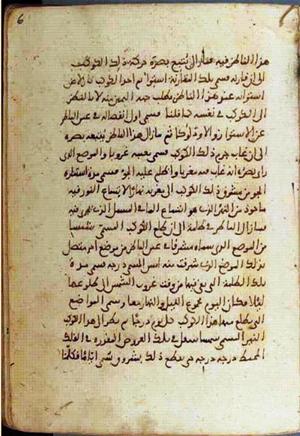
هٰذا الناظر فيه.

فما زال يتبع بصره حركة ذٰلك الكوكب إلى أن قارنه، فسمى تلك القارنة استواء. ثم أخذ الكوكب نازلا عن استواءه عند هٰذا الناظر، يطلب جهة اليمين منه، لا بالنظر إلى الكوكب في نفسه، كما قلنا. فسمى أول انفصاله في عين الناظر عن الاستواء زوالا ودلوكا.

ثم ما زال هٰذا الناظر يتبعه بصره إلى أن غاب جرم ذٰلك الكوكب، فسمى مغيبه غروبا والموضع الذي رأى بصره أنه غاب فيه مغربا، وأظلم عليه الجو. فسمى مدة استنارة الجو من مشرق ذٰلك الكوكب إلى مغربه نهارا، لاتساع النور فيه، مأخوذ من النهر الذي هو اتساع الماء في المسيل الذي يجري فيه.

فما زال الناظر في ظلمة، إلى أن طلع الكوكب المسمى شمسا، من الموضع الذي سماه مشرقا في عين الناظر من موضع آخر متصل بذٰلك الموضع الذي شرقت منه أمس، المسمى درجة. فسمى مدة تلك الظلمة التي بقي فيها من وقت غروب الشمس إلى طلوعها ليلا؛ فكان اليوم مجموع الليل والنهار معا، وسمي المواضع التي يطلع منها هٰذا الكوكب كل يوم درجا.

(الشهر والسنة ونسب الأوقات)

ثم نظر إلى هٰذا الكوكب النير المسمى شمسا ينتقل في تلك الفروض المقدرة في الفلك المحيط، درجة درجة حتى يقطع ذٰلك بشروق تسمى أياما، فكلما
English

the observer stood.

He followed the movement of that celestial body with his gaze until it came into line with him, and he called that alignment culmination. Then the body began to descend from its culmination as seen by the observer, moving toward his right, as we have said of the relative position of the observer and the celestial body. The first apparent departure from culmination he called the sun’s decline, zawāl or dulūk.

The observer continued to follow it with his gaze until the body disappeared. He called its disappearance sunset and the place where he saw it disappear the west. The air grew dark around him. He called the duration of the illumination of the air from that body’s rising to its setting daytime, nahār, from the spreading of light in it. He derived the term from nahr, a river, where water spreads in the channel in which it flows.

The observer remained in darkness until the body called the sun rose from the region he called the east. In his sight it rose from a different position adjoining the place from which it had risen the day before. This was called a degree. He called the duration of that darkness, from sunset until sunrise, night. The day as a whole comprises night and daytime. The places from which the celestial body rises each day were called degrees.

(The Month, the Year, and the Relations of Times)

Then he watched this luminous body called the sun move in the divisions posited in the encompassing sphere, degree by degree, traversing them through a succession of risings called days. Whenever it

Manuscript imageManuscript volume 6 · Page 12

Arabic and English are linked by the same Konya page ID. Page alignment is approximate; consult the manuscript image for verification.

Cairo source reference

Ibn al-Arabi, The Meccan Revelations — Manuscript volume 6 · Page 12 — https://www.futmak.com/english/konya/pages.php?id=1584&text=both