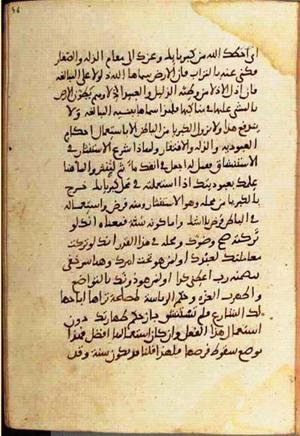
that is, may God bring you down from your pride and might to the station of abasement and lowliness. He refers to that figuratively by dust.
God has called the earth tractable in an intensive form. The most abased is that upon which even the abased tread. The servants are lowly, yet they tread upon the earth as they walk along its slopes. Hence He called it by the intensive form. Pride can be warded off and removed from within only by observing the requirements of servanthood, abasement, and need.
That is why expelling the water was prescribed with drawing water into the nose. One is told, “Put water into your nose, then blow it out.” Here the water is your knowledge of your servanthood. When you apply it to the seat of your pride, it carries the pride out of its place. That is the inward blowing out. Some of this is obligatory, and its inward use is obligatory beyond doubt.
(Where the Obligation Falls Away and the Merit Remains)
Calling it Sunnah means that if you omit it, your ablution is valid. Its application to this extent is as follows. Suppose you refrain from treating your servant, someone under your command, or someone below you with humility. There is a hidden secret here in the words “Lord, give me such and such.” If you show might and exercise authority in view of a benefit you discern and that the Lawgiver has permitted, and so do not draw in the water, your purification is valid without that act, though performing it is better.
This is where its obligatory force falls away. That is why we say it can be a Sunnah practice and can
Notes
Translator’s note TN1368-1: The nose is the outward seat of pride in the idiom discussed on the preceding page. Drawing water in and expelling it become an inward exercise in applying knowledge of servanthood and removing pride.