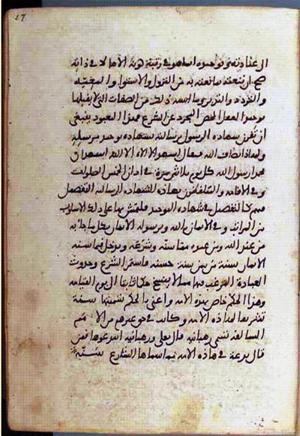
to worship and affirm as one is considered at the rank of His divinity, rather than in His Essence, it is sound to describe Him as He has described Himself, with descent, establishment, being with, hesitation, reflection, and other attributes that a doctrine of oneness reached by pure reason alone, apart from revealed Law, does not admit.
With regard to this One who is worshipped, the testimony to the Messenger’s messengerhood should be joined to the testimony to the oneness of the One who sent him. For this reason the Messenger is named in relation to Him, and one says, “I testify that there is no god but God. I testify that Muhammad is the Messenger of God,” thirty times every day in the calls to the five prayers and in the calls to commence them. Those who utter this testimony to messengerhood differ in excellence, just as those who utter the testimony to oneness do. Let us therefore proceed through its ranks in the same way.
(Good Practice, Following, and Innovation)
Faith in God and in His Messenger includes faith in everything the Messenger brought from God and everything he himself established as a practice and prescribed. What he established as a practice includes faith in the practice of one who institutes a good practice. Thus the revealed Law continues, and the introduction of an encouraged devotional act may take place without abrogating any established ruling, until the Day of Resurrection.
This ruling is peculiar to this community. By the ruling I mean calling it a sunna, in honor of this community. For earlier communities it was called monasticism. He, exalted is He, says, “And monasticism, which they invented” [al-Hadid 57:27]. So whoever calls something in this community an innovation when the Lawgiver has called it a sunna
Notes
Translator’s note TN1330-1: The count of thirty is the author’s count for the calls to prayer and the calls to commence prayer taken together. The text also distinguishes the rank of divinity, at which the revealed descriptions apply, from the Essence considered in itself.