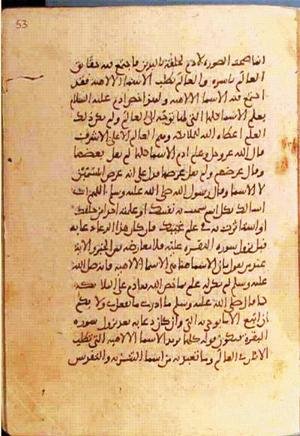
The form belonged to Adam because he was created with the two hands. Thus the realities of the world in its entirety were brought together in him. The world calls for the divine Names, so the divine Names too were brought together in him. This is why Adam, peace be upon him, was singled out for knowledge of all the Names that are directed toward the world. God had not given that knowledge to the angels, who are the higher and nobler world.
God, mighty and majestic, said, “He taught Adam the names, all of them” [al-Baqarah 2:31]. He did not say “some of them.” He said, “He presented them,” using the masculine plural, and did not say it with the feminine form. This indicates that He presented those who were named rather than the names. The Messenger of God, may God bless him and grant him peace, said, “O God, I ask You by every Name by which You have named Yourself, or which You have taught to any of Your creatures, or which You have kept for Yourself in Your knowledge of the unseen.”
If he offered this prayer before Surat al-Baqarah was sent down to him, there is no contradiction between the report and the verse for one who holds that the names here are the divine Names. For he, may God bless him and grant him peace, had no knowledge of the distinction God had granted Adam over the angels. As he, may God bless him and grant him peace, said, “I do not know what will be done with me or with you. I follow only what is revealed to me” [al-Ahqaf 46:9].
If he prayed it after Surat al-Baqarah was sent down, “all of them” means the divine Names that call for effects in the world and the Names of transcendence and sanctification through which He is worshipped.
Notes
Translator’s note TN1064-1: The masculine plural object of ʿaraḍahum, “He presented them,” prompts the distinction between those who bear the names and the names themselves. A feminine singular object, ʿaraḍahā, would ordinarily refer back to the nonhuman plural “names.”