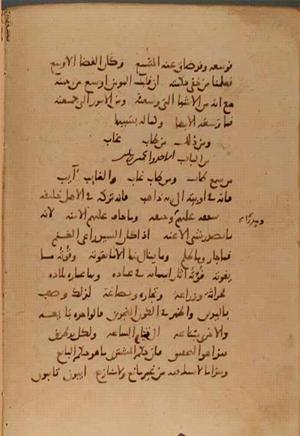
It encompassed Him, though the spacious had been too narrow for Him. It was the broadest expanse.
From His hidden wisdom we thus learned that the believer’s heart is vaster than His mercy[82], although the heart is among the things mercy encompassed and among the affairs it gathered. It encompassed Him only through mercy, and its perfection comes through it.
Among this: whoever delights becomes absent, from Chapter Two Hundred and Fifty-One, 251.
One who hears delights; one who delights becomes absent, and the absent one returns. In his return he goes to his Lord, having left Him as vicegerent over his family out of compassion, caution, and fear for them. He feared for them only from Him, for nothing issues except from Him.
If the master is the sheep’s shepherd, he has neither deviated nor wronged. He takes from them only what sustains him, and his sustenance does not escape him.
His sustenance is the effects of His Names within His servants, through which His lands are cultivated: plowing and planting, trade and merchandise. That is why He was described through two hands and manifested the two high paths within being. One hand sells, and the other buys, until the Hour arises.
Every hand has a path. This is realization. The buyer’s ruling is not the seller’s ruling; there is no doubt of that, no preventer or contender.
Returning, repenting,
Anmerkungen
[82]
(The expression connects with the author’s following qualification: the heart is among the things encompassed by mercy, and its vastness is through mercy.)
Translator’s note: “His sustenance does not escape him” reads mā negatively. Relative mā also permits “His sustenance is what escapes him.”