
Futmak · الفتوحات المكية · Meccan Revelations

Al-Futūḥāt al-Makkiyya

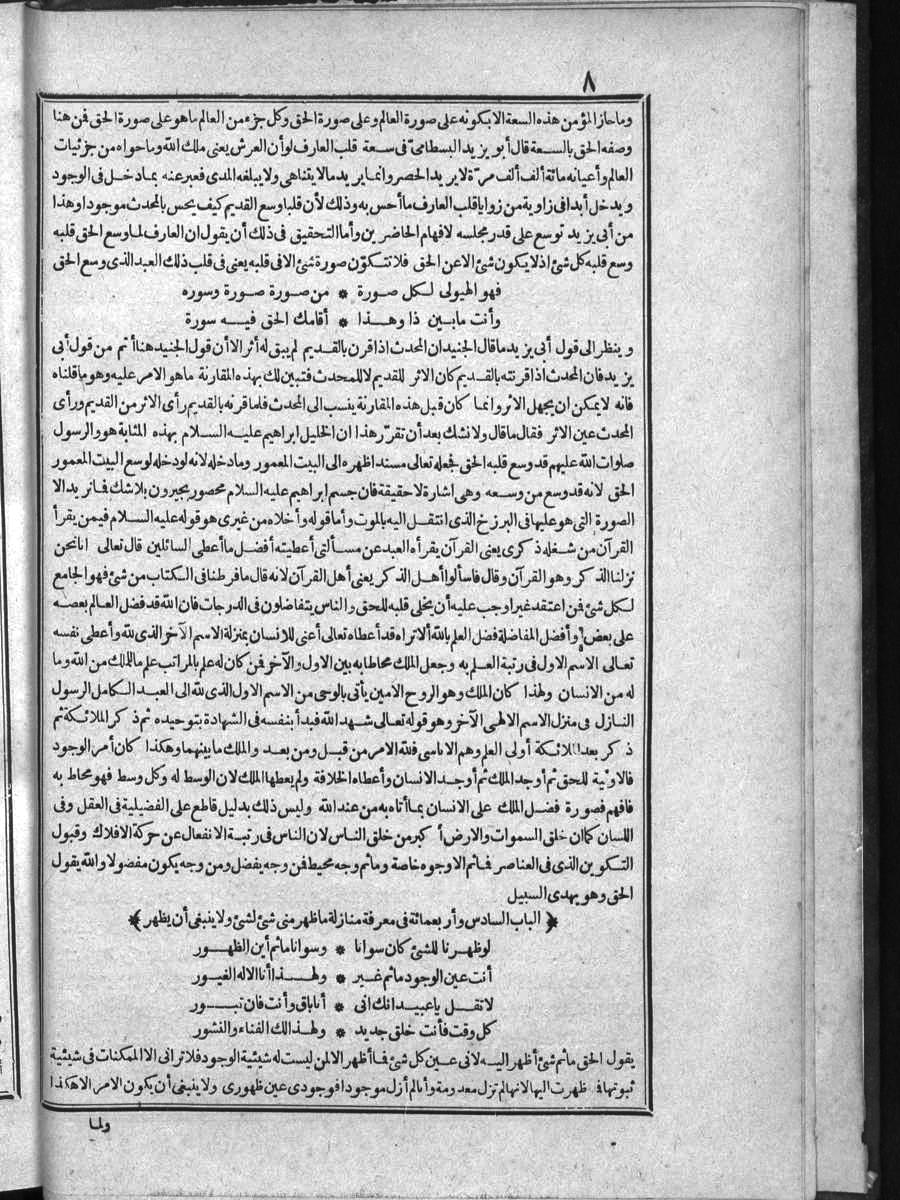
Volumen impreso 4 · Página 8

El Cairo / Maymaniyya

Abrir página

Árabe

وما حاز المؤمن هذه السعة إلا بكونه على صورة العالم وعلى صورة الحق وكل جزء من العالم ما هو على صورة الحق فمن هنا وصفه الحق بالسعة قال أبو يزيد البسطامي في سعة قلب العارف لو أن العرش يعني ملك الله وما حواه من جزئيات العالم وأعيانه مائة ألف ألف مرة لا يريد الحصر وإنما يريد ما لا يتناهى ولا يبلغه المدى فعبر عنه بما دخل في الوجود ويدخل أبدا في زاوية من زوايا قلب العارف ما أحس به وذلك لأن قلبا وسع القديم كيف يحس بالمحدث موجودا وهذا من أبي يزيد توسع على قدر مجلسه لإفهام الحاضرين وأما التحقيق في ذلك أن يقول إن العارف لما وسع الحق قلبه وسع قلبه كل شي‏ء إذ لا يكون شي‏ء إلا عن الحق فلا تتكون صورة شي‏ء إلا في قلبه يعني في قلب ذلك العبد الذي وسع الحق‏

فهو الهيولى لكل صورة *** من صورة صورة وسورة

وأنت ما بين ذا وهذا *** أقامك الحق فيه سورة

وينظر إلى قول أبي يزيد ما قال الجنيد أن المحدث إذا قرن بالقديم لم يبق له أثر إلا أن قول الجنيد هنا أتم من قول أبي يزيد فإن المحدث إذا قرنته بالقديم كان الأثر للقديم لا للمحدث فتبين لك بهذه المقارنة ما هو الأمر عليه وهو ما قلناه فإنه لا يمكن أن يجهل الأثر وإنما كان قبل هذه المقارنة ينسب إلى المحدث فلما قرنه بالقديم رأى الأثر من القديم ورأى المحدث عين الأثر فقال ما قال ولا نشك بعد أن تقرر هذا أن الخليل إبراهيم عليه السلام بهذه المثابة هو والرسول صلوات الله عليهم قد وسع قلبه الحق فجعله تعالى مسندا ظهره إلى البيت المعمور وما دخله لأنه لو دخله لوسع البيت المعمور الحق لأنه قد وسع من وسعه وهي إشارة لا حقيقة فإن جسم إبراهيم عليه السلام محصور بجيرون بلا شك فما نريد إلا الصورة التي هو عليها في البرزخ الذي انتقل إليه بالموت وأما قوله وأخلاه من غيري هوقوله عليه السلام فيمن يقرأ القرآن من شغله ذكري‏

يعني القرآن يقرأه العبد عن مسألتي أعطيته أفضل ما أعطى السائلين قال تعالى إِنَّا نَحْنُ نَزَّلْنَا الذِّكْرَ وهو القرآن وقال فَسْئَلُوا أَهْلَ الذِّكْرِ يعني أهل القرآن لأنه قال ما فَرَّطْنا في الْكِتابِ من شَيْ‏ءٍ فهو الجامع لكل شي‏ء فمن اعتقد غير أوجب عليه أن يخلي قلبه للحق والناس يتفاضلون في الدرجات فإن الله قد فضل العالم بعضه على بعض وأفضل المفاضلة فضل العلم بالله أ لا تراه قد أعطاه تعالى أعني للإنسان بمنزلة الاسم الآخر الذي لله وأعطى نفسه تعالى الاسم الأول في رتبة العلم به وجعل الملك محاطا به بين الأول والآخر فمن كان له علم بالمراتب علم ما للملك من الله وما له من الإنسان ولهذا كان الملك وهو الروح الأمين يأتي بالوحي من الاسم الأول الذي لله إلى العبد الكامل الرسول النازل في منزل الاسم الإلهي الآخر وهو قوله تعالى شَهِدَ الله فبدأ بنفسه في الشهادة بتوحيده ثم ذكر الملائكة ثم ذكر بعد الملائكة أولي العلم وهم الأناسي ف لِلَّهِ الْأَمْرُ من قَبْلُ ومن بَعْدُ والملك ما بينهما وهكذا كان أمر الوجود فالأولية للحق ثم أوجد الملك ثم أوجد الإنسان وأعطاه الخلافة ولم يعطها الملك لأن الوسط له وكل وسط فهو محاط به فافهم فصورة فضل الملك على الإنسان بما أتاه به من عند الله وليس ذلك بدليل قاطع على الفضيلية في العقل وفي اللسان كما إن خلق السَّماواتِ والْأَرْضِ أَكْبَرُ من خَلْقِ النَّاسِ لأن الناس في رتبة الانفعال عن حركة الأفلاك وقبول التكوين الذي في العناصر فما ثم إلا وجوه خاصة وما ثم وجه محيط فمن وجه يفضل ومن وجه يكون مفضولا والله يَقُولُ الْحَقَّ وهُوَ يَهْدِي السَّبِيلَ‏

«الباب السادس وأربعمائة في معرفة منازلة ما ظهر مني شي‏ء لشي‏ء ولا ينبغي أن يظهر»

لو ظهرنا للشي‏ء كان سوانا *** وسوانا ما ثم أين الظهور

أنت عين الوجود ما ثم غير *** ولهذا أنا الإله الغيور

لا تقل يا عبيد إنك أني *** أنا باق وأنت فإن تبور

كل وقت فأنت خلق جديد *** ولهذا لك الفناء والنشور

[وجود الله عين ظهوره‏]

يقول الحق ما ثم شي‏ء أظهر إليه لأني عين كل شي‏ء فما أظهر إلا لمن ليست له شيئية الوجود فلا تراني إلا الممكنات في شيئية ثبوتها فما ظهرت إليها لأنها لم تزل معدومة وأنا لم أزل موجودا فوجودي عين ظهوري ولا ينبغي أن يكون الأمر إلا هكذا
Inglés

And the believer does not attain this capacity except by being on the image of the world and the image of the truth, and every part of the world is not in the image of the truth. Hence, the truth described it as capacity. Abu Yazid Al-Bastami said, in the capacity of the heart of the gnostic, if the throne means the king of God and what it contains from the particles of the world and its notables one hundred thousand Once he does not want to be limited, but rather wants what is infinite and does not reach the extent, so he expresses it with what has entered into existence and never enters into one of the corners of the heart of the knower what he felt, and that is because a heart expanded the old how to feel the updated present, and this from Abi Yazid expanded to the extent of his assembly to understand the present. In that he says that the knower when his heart expands the truth his heart expands everything, since nothing is except from the truth, so the image of a thing is not formed except in his heart, that is, in the heart of that servant who expands the truth.

He is the structure for every image *** from the image of an image and a surah

And you are what is between that and this *** the truth has established you in it Surah

And look at the saying of Abu Yazid what al-Junayd said that if a muhaddith was paired with the old, no trace of it remains except that the saying of al-Junayd here is more complete than the saying of Abu Yazid, for if the muhaddith is paired with the old, the effect is for the old and not for the narrator. The trace may be ignorant, but before this comparison it was attributed to the narrator. Resting his back to the famous House and what he entered, because if he entered it, the right house would have expanded, because it has expanded from its capacity, and it is a sign that is not real, because the body of Abraham, peace be upon him, is undoubtedly confined to Jiroun, so we only want the image that he is in the isthmus that he moved to by death. he is

His saying, peace be upon him, regarding the one who recites the Qur an from his occupation is remembrance

I mean, the Qur an is recited by the servant about my question. I gave him the best of what he gave the askers. He the Most High said: It is we who have revealed the Remembrance, which is the Qur an. For the truth, people differ in degrees, for God has preferred the world to some of it over others, and the best comparison is the superiority of knowledge of God. Do you not see it? God Almighty has given it to man in the same position as the other name that God has. Knowledge of the ranks, knowledge of what the king has from God and what he has from man. That is why the king, who is the faithful spirit, brings revelation from the first name of God to the perfect servant, the Messenger, who descended in the house of the other divine name, which is His saying, the Most High, God testified, so he himself began to testify with his monotheism, then he mentioned the angels, then he mentioned after The angels are the first of knowledge, and they are the human beings, so God has the command before and after, and the king is what is between them, and so was the matter of existence. He is surrounded by it, so understand the image of the virtue of the king over man with what he brought to him from God, and this is not a conclusive evidence of virtue in the mind and the tongue, just as the creation of the heavens and the earth is greater than the creation of people, because people are in the rank of reaction to the movement of the celestial bodies and acceptance of the formation that is in the elements. Private faces and what is then a surrounding face, so it is a face that is preferred, and who is a face that is preferred, and God speaks the truth and He guides the way

from me for something, and it should not appear.

If we appeared to something, it would have been other than us *** and us What then where to appear

You are the eye of existence, what then other than *** and that is why I am the jealous God

Do not say, O servants, that you are *** I am staying and you, if you vanish

Every time you are a new creation *** and for this you have annihilation and resurrection

[ God's presence is the same as his appearance ]

He says the truth, then something is revealed to Him, because I am the eye of everything, so I do not appear except for those who have no object of existence, so you see me only the possible in the object of their affirmation, so I did not appear to them because they are still non-existent and I still exist, so my existence is the same as my appearance, and the matter should not be except thus

Imagen de la página impresaVolumen impreso 4 · Página 8

Los textos se vinculan por volumen y página impresos, no por el identificador del registro de traducción. Consulte el árabe al citar.

Ibn al-Arabi, al-Futuhat al-Makkiyya — El Cairo / Maymaniyya — Volumen impreso 4 · Página 8 — https://www.futmak.com/espanol/maymaniya/pages.php?id=2032&text=both