
Futmak · الفتوحات المكية · Meccan Revelations

Al-Futūḥāt al-Makkiyya

Volumen impreso 2 · Página 681

El Cairo / Maymaniyya

Abrir página

Árabe

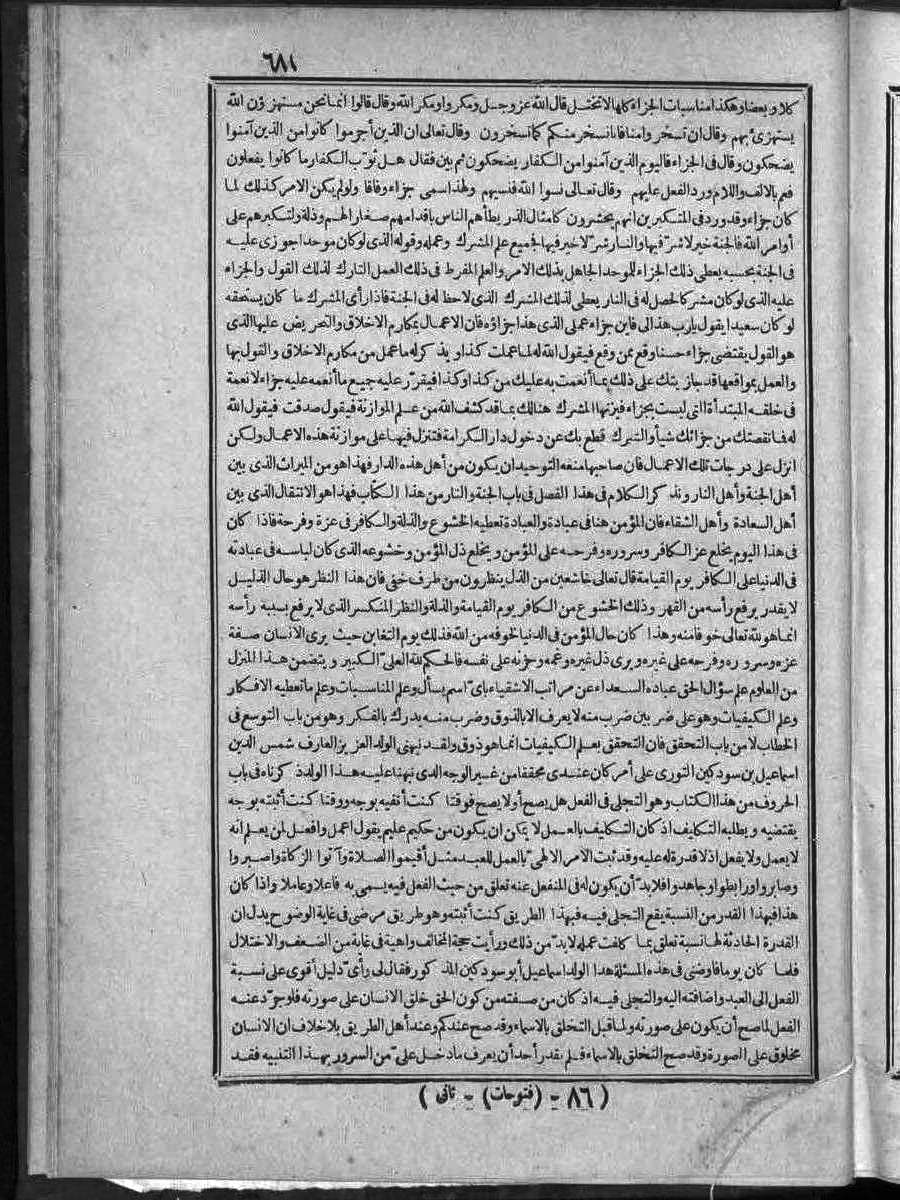
كلا وبعضا وهكذا مناسبات الجزاء كلها لا تختل قال الله عز وجل ومَكَرُوا ومَكَرَ الله وقال قالُوا (إِنَّا مَعَكُمْ) إِنَّما نَحْنُ مُسْتَهْزِؤُنَ الله يَسْتَهْزِئُ بِهِمْ وقال إِنْ تَسْخَرُوا مِنَّا فَإِنَّا نَسْخَرُ مِنْكُمْ كَما تَسْخَرُونَ وقال تعالى إِنَّ الَّذِينَ أَجْرَمُوا كانُوا من الَّذِينَ آمَنُوا يَضْحَكُونَ وقال في الجزاء فَالْيَوْمَ الَّذِينَ آمَنُوا من الْكُفَّارِ يَضْحَكُونَ ثم بين فقال هَلْ ثُوِّبَ الْكُفَّارُ ما كانُوا يَفْعَلُونَ فعم بالألف واللام ورد الفعل عليهم وقال تعالى نَسُوا الله فَنَسِيَهُمْ ولهذا سمي جَزاءً وِفاقاً ولو لم يكن الأمر كذلك لما كان جزاء وقد ورد في المتكبرين أنهم يحشرون كأمثال الذر يطئوهم الناس بأقدامهم‏

صغارا لهم وذلة ولتكبرهم على أوامر الله فالجنة خير لا شر فيها والنار شر لا خير فيها فجميع علم المشرك وعمله وقوله الذي لو كان موحدا جوزي عليه في الجنة بحسبه يعطي ذلك الجزاء للموحد الجاهل بذلك الأمر والعلم المفرط في ذلك العمل التارك لذلك القول والجزاء عليه الذي لو كان مشركا لحصل له في النار يعطي لذلك المشرك الذي لا حظ له في الجنة فإذا رأى المشرك ما كان يستحقه لو كان سعيدا يقول يا رب هذا لي فأين جزاء عملي الذي هذا جزاؤه فإن الأعمال بمكارم الأخلاق والتحريض عليها الذي هو القول يقتضي جزاء حسنا وقع ممن وقع فيقول الله له لما عملت كذا ويذكر له ما عمل من مكارم الأخلاق والقول بها والعمل بمواقعها قد جازيتك على ذلك بما أنعمت به عليك من كذا وكذا فيقرر عليه جميع ما أنعمه عليه جزاء لا نعمة في خلقه المبتدأة التي ليست بجزاء فيزنها المشرك هنالك بما قد كشف الله من علم الموازنة فيقول صدقت فيقول الله له فما نقصتك من جزائك شيئا والشرك قطع بك عن دخول دار الكرامة فتنزل فيها على موازنة هذه الأعمال ولكن أنزل على درجات تلك الأعمال فإن صاحبها منعه التوحيد أن يكون من أهل هذه الدار فهذا هو من الميراث الذي بين أهل الجنة وأهل النار ونذكر الكلام في هذا الفصل في باب الجنة والنار من هذا الكتاب فهذا هو الانتقال الذي بين أهل السعادة وأهل الشقاء فإن المؤمن هنا في عبادة والعبادة تعطيه الخشوع والذلة والكافر في عزة وفرحة فإذا كان في هذا اليوم يخلع عز الكافر وسروره وفرحه على المؤمن ويخلع ذل المؤمن وخشوعه الذي كان لباسه في عبادته في الدنيا على الكافر يوم القيامة قال تعالى خاشِعِينَ من الذُّلِّ يَنْظُرُونَ من طَرْفٍ خَفِيٍّ فإن هذا النظر هو حال الذليل لا يقدر يرفع رأسه من القهر وذلك الخشوع من الكافر يوم القيامة والذلة والنظر المنكسر الذي لا يرفع بسببه رأسه إنما هو لله تعالى خوفا منه وهذا كان حال المؤمن في الدنيا لخوفه من الله ف ذلِكَ يَوْمُ التَّغابُنِ حيث يرى الإنسان صفة عزه وسروره وفرحه على غيره ويرى ذل غيره وغمه وحزنه على نفسه فَالْحُكْمُ لِلَّهِ الْعَلِيِّ الْكَبِيرِ ويتضمن هذا المنزل من العلوم علم سؤال الحق عباده السعداء عن مراتب الأشقياء بأي اسم يسأل وعلم المناسبات وعلم ما تعطيه الأفكار وعلم الكيفيات وهو على ضربين ضرب منه لا يعرف إلا بالذوق وضرب منه يدرك بالفكر وهو من باب التوسع في الخطاب لا من باب التحقق فإن التحقق بعلم الكيفيات إنما هو ذوق ولقد نبهني الولد العزيز العارف شمس الدين إسماعيل بن سودكين التوري على أمر كان عندي محققا من غير الوجه الذي نبهنا عليه هذا الولد ذكرناه في باب الحروف من هذا الكتاب وهو التجلي في الفعل هل يصح أو لا يصح فوقتا كنت أنفيه بوجه ووقتا كنت أثبته بوجه يقتضيه ويطلبه التكليف إذ كان التكليف بالعمل لا يمكن أن يكون من حكيم عليم يقول اعمل وافعل لمن يعلم أنه لا يعمل ولا يفعل إذ لا قدرة له عليه وقد ثبت الأمر الإلهي بالعمل للعبد مثل أَقِيمُوا الصَّلاةَ وآتُوا الزَّكاةَ واصْبِرُوا وصابِرُوا ورابِطُوا وجاهِدُوا فلا بد أن يكون له في المنفعل عنه تعلق من حيث الفعل فيه يسمى به فاعلا وعاملا وإذا كان هذا فبهذا القدر من النسبة يقع التجلي فيه فبهذا الطريق كنت أثبته وهو طريق مرضي في غاية الوضوح يدل أن القدرة الحادثة لها نسبة تعلق بما كلفت عمله لا بد من ذلك ورأيت حجة المخالف واهية في غاية من الضعف والاختلال فلما كان يوما فاوضني في هذه المسألة هذا الولد إسماعيل أبو سودكين المذكور فقال لي وأي دليل أقوى على نسبة الفعل إلى العبد وإضافته إليه والتجلي فيه إذ كان من صفته من كون الحق خلق الإنسان على صورته فلو جرد عنه الفعل لما صح أن يكون على صورته ولما قبل التخلق بالأسماء وقد صح عندكم وعند أهل الطريق بلا خلاف إن الإنسان مخلوق على السورة وقد صح التخلق بالأسماء فلم يقدر أحد أن يعرف ما دخل علي من السرور بهذا التنبيه فقد
Inglés

( ) Those who believed from the infidels laughing, then he explained and said, Have the infidels been rewarded for what they did? So it was filled with a thousand and blaming and the reaction to them, and the Almighty said they forgot God, so He forgot his name, and if it was a recompense, it would not have been a recompense for this.

It has been reported among the arrogant that they will be gathered like scattered shards that people tread on their feet

They are young and humiliated, and to grow up on God s commands, for Paradise is good and there is no evil in it, and Hellfire is evil with no good in it. If a polytheist sees what he deserves if he was happy, he says, O Lord, this is for me, so where is the reward for my work, which is his reward? Then God says to him: When you did such-and-such, and he mentions to him what he did of noble manners, speaking of them, and acting according to their positions, I have rewarded you for that with what I have bestowed upon you from such-and-such. Whoever knows the balance, then he says, You have spoken the truth. Then God says to him, What did you lack from your reward in the slightest, and polytheism cuts you off from entering the House of Dignity, so you come down in it on the balance of these deeds, but it was revealed to the degrees of those deeds, for its owner is forbidden by monotheism to be one of the people of this house, so this is from the inheritance that is among the people of the We mention the words in this chapter in the chapter on Heaven and Hell from this book. This is the transition between the people of happiness and the people of misery. The believer here is in worship and worship gives him reverence and humility, and the unbeliever in pride and joy. The humiliation of the believer and his reverence that his dress in his worship in this world was upon the unbeliever on the Day of Resurrection, God Almighty said: humiliate from humiliation, looking from a hidden side, for this look is the state of the humiliated. It is for God Almighty for fear of Him, and this was the condition of the believer in this world because of his fear of God, for that is the Day of At-Tagaban, when a person sees the attribute of his pride, happiness and joy over others, and he sees the humiliation of others, his grief and his grief over himself. The wretched by what name he asks, he knows the occasions, he knows what ideas give him, and he knows the modalities, and it is of two kinds, a kind of it that is known only by taste, and a kind of it that is perceived by thought, and it is a matter of expansion in discourse, not of verification. Verifying with the knowledge of the qualifiers is only a taste, and the dear, knowledgeable boy Shams al-Din Ismail bin Sudkin Al-Touri alerted me to a matter that I had an investigation from other than the way that this boy alerted us to in the chapter on letters of this book, which is the manifestation of the act. In a way and at a time, I would prove it in a way that necessitates and is required by the assignment, as the assignment to work cannot be from the Wise, All-Knowing, saying, Work and do for one who knows that he does not work and does not do because he has no power over it. It must have a relation in the passive about it in terms of the action in it called the doer and the agent, and if this is in this proportion of the proportion the manifestation occurs in it, then in this way I proved it, and it is a path that is satisfactory and very clear, indicating that the power that occurs has a ratio related to what it has been assigned to do. And I saw the argument of the opponent, very weak and flawed, and when he was one day, this boy, Ismael Abu Sudkin, mentioned, negotiated with me on this issue. The human being is in his image, and if the act was stripped of him, it would not have been correct to be in his image, and it would not have been before the creation of names.

Imagen de la página impresaVolumen impreso 2 · Página 681

Los textos se vinculan por volumen y página impresos, no por el identificador del registro de traducción. Consulte el árabe al citar.

Ibn al-Arabi, al-Futuhat al-Makkiyya — El Cairo / Maymaniyya — Volumen impreso 2 · Página 681 — https://www.futmak.com/espanol/maymaniya/pages.php?id=1444&text=both