
Futmak · الفتوحات المكية · Meccan Revelations

Al-Futūḥāt al-Makkiyya

Volumen impreso 2 · Página 679

El Cairo / Maymaniyya

Abrir página

Árabe

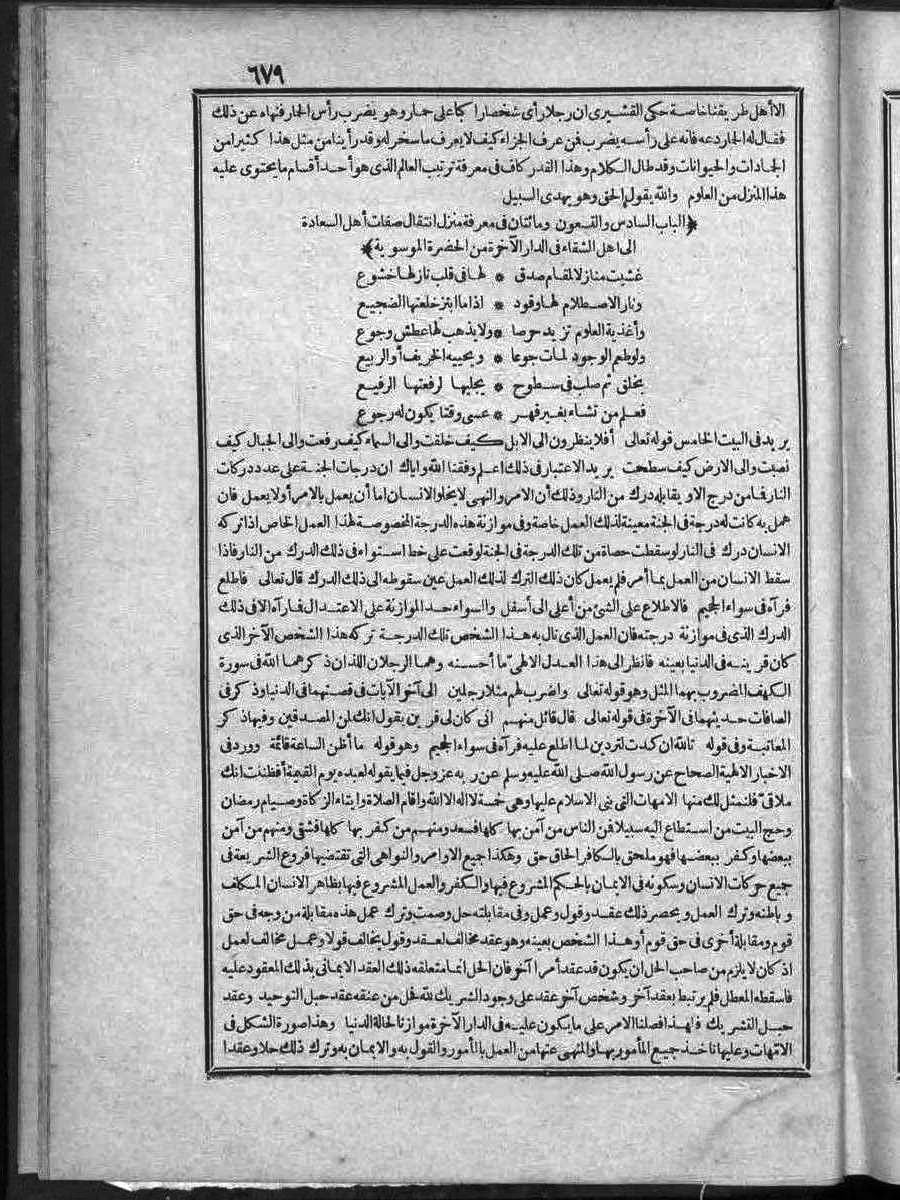
إلا أهل طريقنا خاصة حكى القشيري أن رجلا رأى شخصا راكبا على حمار وهو يضرب رأس الحمار فنهاه عن ذلك فقال له الحمار دعه فإنه على رأسه يضرب فمن عرف الجزاء كيف لا يعرف ما سخر له وقد رأينا من مثل هذا كثيرا من الجمادات والحيوانات وقد طال الكلام وهذا القدر كاف في معرفة ترتيب العالم الذي هو أحد أقسام ما يحتوي عليه هذا المنزل من العلوم والله يَقُولُ الْحَقَّ وهُوَ يَهْدِي السَّبِيلَ‏

«الباب السادس والتسعون ومائتان في معرفة منزل انتقال صفات أهل السعادة إلى أهل الشقاء في الدار الآخرة من الحضرة الموسوية»

غشيت منازلا لمقام صدق *** لها في قلب نازلها خشوع‏

ونار الاصطلام لها وقود *** إذا ما ابتز خلعتها الضجيع‏

وأغذية العلوم تزيد حرصا *** ولا يذهب لها عطش وجوع‏

ولو طعم الوجود لمات جوعا *** ويحييه الخريف أو الربيع‏

بخلق ثم صلب في سطوح *** يجليها لرفعتها الرفيع‏

فعلم من تشاء بغير قهر *** عسى وقتا يكون له رجوع‏

يريد في البيت الخامس قوله تعالى أَ فَلا يَنْظُرُونَ إِلَى الْإِبِلِ كَيْفَ خُلِقَتْ وإِلَى السَّماءِ كَيْفَ رُفِعَتْ وإِلَى الْجِبالِ كَيْفَ نُصِبَتْ وإِلَى الْأَرْضِ كَيْفَ سُطِحَتْ يريد الاعتبار في ذلك‏

[أن درجات الجنة على عدد دركات النار]

اعلم وفقنا الله وإياك أن درجات الجنة على عدد دركات النار فما من درج إلا ويقابله درك من النار وذلك أن الأمر والنهي لا يخلو الإنسان إما أن يعمل بالأمر أو لا يعمل فإن همل به كانت له درجة في الجنة معينة لذلك العمل خاصة وفي موازنة هذه الدرجة المخصوصة لهذا العمل الخاص إذا تركه الإنسان درك في النار لو سقطت حصاة من تلك الدرجة في الجنة لوقعت على خط استواء في ذلك الدرك من النار فإذا سقط الإنسان من العمل بما أمر فلم يعمل كان ذلك الترك لذلك العمل عين سقوطه إلى ذلك الدرك قال تعالى فَاطَّلَعَ فَرَآهُ في سَواءِ الْجَحِيمِ فالاطلاع على الشي‏ء من أعلى إلى أسفل والسواء حد الموازنة على الاعتدال فما رآه إلا في ذلك الدرك الذي في موازنة درجته فإن العمل الذي نال به هذا الشخص تلك الدرجة تركه هذا الشخص الآخر الذي كان قرينه في الدنيا بعينه فانظر إلى هذا العدل الإلهي ما أحسنه وهما الرجلان اللذان ذكرهما الله في سورة الكهف المضروب بهما المثل وهو قوله تعالى واضْرِبْ لَهُمْ مَثَلًا رَجُلَيْنِ إلى آخر الآيات في قصتهما في الدنيا وذكر في الصافات حديثهما في الآخرة في قوله تعالى قالَ قائِلٌ مِنْهُمْ إِنِّي كانَ لِي قَرِينٌ يَقُولُ أَ إِنَّكَ لَمِنَ الْمُصَدِّقِينَ وفيها ذكر المعاتبة وفي قوله تَاللَّهِ إِنْ كِدْتَ لَتُرْدِينِ لما اطلع عليه فَرَآهُ في سَواءِ الْجَحِيمِ وهو قوله ما أَظُنُّ السَّاعَةَ قائِمَةً وورد في الأخبار الإلهية الصحاح عن رسول الله صلى الله عليه وسلم عن ربه عز وجل فيما يقوله لعبده يوم القيامة أ فظننت إنك ملاقي‏

فلنمثل لك منها الأمهات التي بنى الإسلام عليها وهي خمسة لا إله إلا الله وإقام الصلاة وإيتاء الزكاة وصيام رمضان وحِجُّ الْبَيْتِ من اسْتَطاعَ إِلَيْهِ سَبِيلًا فمن الناس من آمن بها كلها فسعد ومنهم من كفر بها كلها فشقي ومنهم من آمن ببعضها وكفر ببعضها فهو ملحق بالكافر إلحاق حق وهكذا جميع الأوامر والنواهي التي تقتضيها فروع الشريعة في جميع حركات الإنسان وسكونه في الايمان بالحكم المشروع فيها والكفر والعمل المشروع فيها بظاهر الإنسان المكلف وباطنه وترك العمل ويحصر ذلك عقد وقول وعمل وفي مقابلته حل وصمت وترك عمل هذه مقابلة من وجه في حق قوم ومقابلة أخرى في حق قوم أو هذا الشخص بعينه وهو عقد مخالف لعقد وقول يخالف قولا وعمل مخالف لعمل إذ كان لا يلزم من صاحب الحل أن يكون قد عقد أمرا آخر فإن الحل إنما متعلقة ذلك العقد الإيماني بذلك المعقود عليه فأسقطه المعطل فلم يرتبط بعقد آخر وشخص آخر عقد على وجود الشريك لله فحل من عنقه عقد حبل التوحيد وعقد حبل التشريك فلهذا فصلنا الأمر على ما يكون عليه في الدار الآخرة موازنا لحالة الدنيا وهذا صورة الشكل في الأمهات وعليها نأخذ جميع المأمور بها والمنهي عنها من العمل بالمأمور والقول به والايمان به وترك ذلك حلا وعقدا
Inglés

Except for the people of our path, in particular, Al-Qushayri narrated that a man saw a person riding on a donkey while he was hitting the donkey s head, but he forbade it. The donkey said to him: Let him be hit on the head. Destiny is sufficient for knowing the order of the world, which is one of the divisions of what this house of science contains, and God speaks the truth and He guides the way.

The two hundred and ninety-sixth chapter on knowing the place of transferring the characteristics of the people of happiness to the people of misery in the afterlife from the presence of the Mosaic.

You have covered the mansions of the station of sincerity *** for her in the heart of the one who comes down with reverence

And the fire of the fire has its fuel *** If it blackens, the bed will take it off

And the food of science increases eagerness *** and does not go away from thirst and hunger

And if he tasted existence, he would die of starvation *** and fall or spring revive him

He was created and then crucified on the surfaces of *** to reveal her for her sublime lofty

Teach whomever you will without coercion *** it may be a time for him to return

In the fifth verse he means what the Most High says: Do they not look at the camels, how they were created, and at the sky, how they were raised, and at the mountains, how they were erected?

[ The degrees of Heaven are based on the number of degrees of Hellfire ]

Know, may God guide us and you, that the degrees of Paradise are based on the number of levels of Hellfire. There is no stairway that is not matched by a level of Hellfire, and that is that the command and the prohibition are not devoid of man, either he works with the order or does not work. For this special action, if a person leaves it, he will be plunged into Hellfire. If a pebble of that degree fell in Paradise, it would fall on an equator line in that den of Hellfire. If a person falls from doing what he was commanded to do and does not act, that abandonment of that action is the exact point of his falling into that dungeon. Whether it is hell, looking at a thing from top to bottom, and whether it is the limit of balance over moderation, so what he saw is only in that descent that is in the balance of his degree, because the work with which this person attained that degree was left by this other person who was his companion in the world in particular, so look at this divine justice What is the best of it, and they are the two men whom God mentioned in Surat Al-Kahf, with whom the parable is multiplied, which is His saying, And present to them an example of two men to the last verses in their story in this world. He says that you are among the truthful, and in it there is mention of admonishment, and in his saying, God, if you are about to return what he saw, he saw him in the depths of Hell, and he is saying what he said.

It was reported in the authentic divine reports on the authority of the Messenger of God, may God bless him and grant him peace, on the authority of his Lord, the Mighty and Sublime, in what he would say to his servant on the Day of Resurrection.

So let us represent to you among them the mothers upon which Islam was built, and they are five: There is no god but God, the establishment of prayer, the giving of zakat, the fasting of Ramadan, and the pilgrimage to the House, whoever is able to make a way to it. And so are all the commands and prohibitions that the branches of Sharia dictate in all the movements of man and his stillness in believing in the lawful ruling in it and in disbelief and the lawful work in it outwardly and inwardly by the person charged and leaving work. A people or this particular person, a contract that contradicts a contract and a saying that contradicts a word and an action that contradicts an act, as it is not necessary for the owner of the solution to have concluded another matter, for the solution is related to that faith contract with that contracted upon, so the invalidator dropped it, so it was not linked to another contract and another person contracted on the existence of the partner To God, let loose from his neck the knot of the rope of monotheism and the knot of the rope of associating, for this reason we have separated the matter as it will be in the hereafter, balancing the condition of the world, and this is the image of the form in mothers, and on them we take all that is commanded and forbidden from work by To be commanded, to say it, to believe in it, and to leave that a solution and a contract

Imagen de la página impresaVolumen impreso 2 · Página 679

Los textos se vinculan por volumen y página impresos, no por el identificador del registro de traducción. Consulte el árabe al citar.

Ibn al-Arabi, al-Futuhat al-Makkiyya — El Cairo / Maymaniyya — Volumen impreso 2 · Página 679 — https://www.futmak.com/espanol/maymaniya/pages.php?id=1442&text=both