
Futmak · الفتوحات المكية · Meccan Revelations

Al-Futūḥāt al-Makkiyya

Volumen impreso 1 · Página 108

El Cairo / Maymaniyya

Abrir página

Árabe

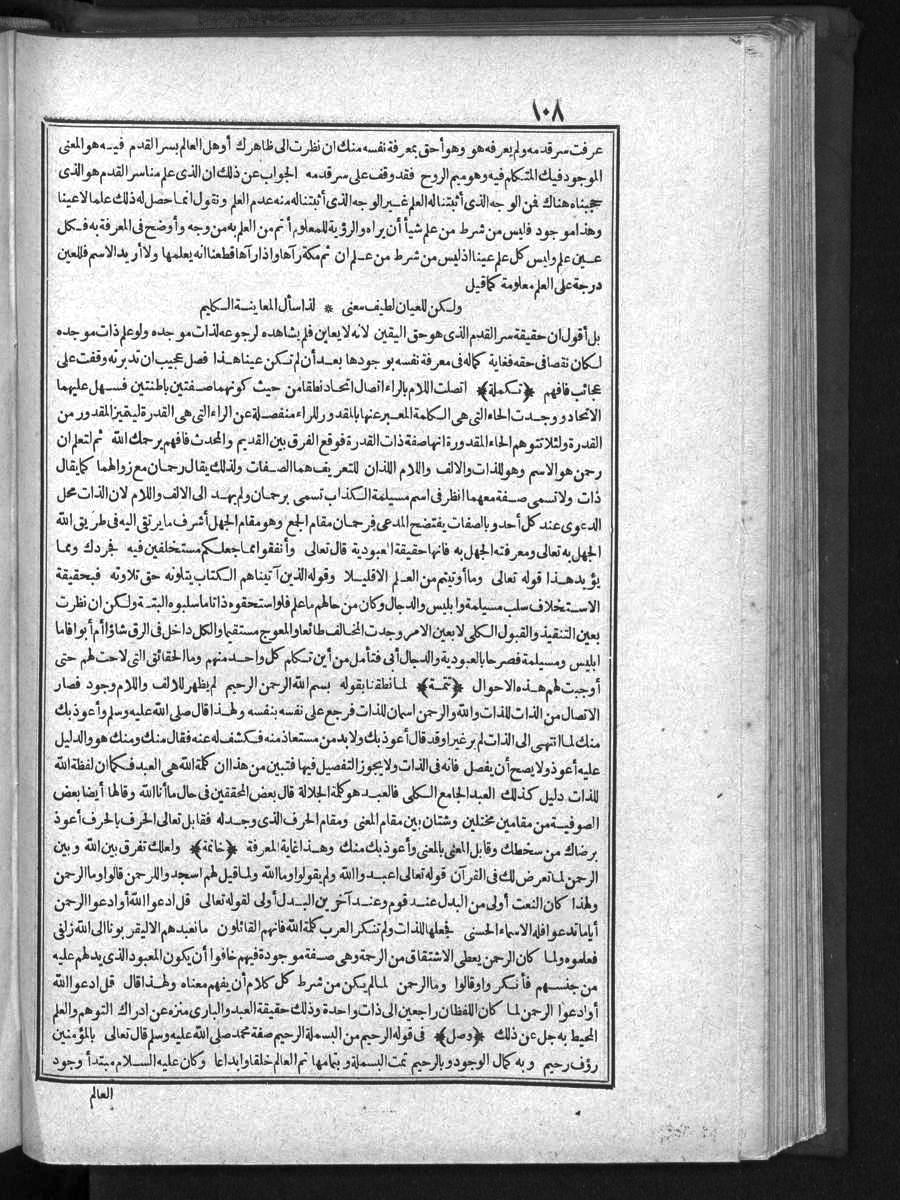
عرفت سر قدمه ولم يعرفه هو وهو أحق بمعرفة نفسه منك إن نظرت إلى ظاهرك أو هل العالم بسر القدم فيه هو المعنى الموجود فيك المتكلم فيه وهو ميم الروح فقد وقف على سر قدمه الجواب عن ذلك أن الذي علم منا سر القدم هو الذي حجبناه هناك فمن الوجه الذي أثبتنا له العلم غير الوجه الذي أثبتنا له منه عدم العلم ونقول إنما حصل له ذلك علما لا عينا وهذا موجود فليس من شرط من علم شيئا أن يراه والرؤية للمعلوم أتم من العلم به من وجه وأوضح في المعرفة به فكل عين علم وليس كل علم عينا إذ ليس من شرط من علم إن ثم مكة رآها وإذا رآها قطعنا أنه يعلمها ولا أريد الاسم فللعين درجة على العلم معلومة كما قيل‏

ولكن للعيان لطيف معنى *** لذا سأل المعاينة الكليم‏

بل أقول إن حقيقة سر القدم الذي هو حق اليقين لأنه لا يعاين فلم يشاهده لرجوعه لذات موجدة ولو علم ذات موجدة لكان نقصا في حقه فغاية كماله في معرفة نفسه بوجودها بعد أن لم تكن عينا هذا فصل عجيب إن تدبرته وقفت على عجائب فافهم‏

(تكملة)

[اتصال اللام بالراء- في الاسم الرحمن- نطقا]

اتصلت اللام بالراء اتصال اتحاد نطقا من حيث كونهما صفتين باطنتين فسهل عليهما الاتحاد ووجدت الحاء التي هي الكلمة المعبر عنها بالمقدور للراء منفصلة عن الراء التي هي القدرة ليتميز المقدور من القدرة ولئلا تتوهم الحاء المقدورة إنها صفة ذات القدرة فوقع الفرق بين القديم والمحدث فافهم يرحمك الله‏

[الرحمن: منكرا ومعرفا]

ثم لتعلم إن رحمن هو الاسم وهو للذات والألف واللام اللذان للتعريف هما الصفات ولذلك يقال رحمان مع زوالهما كما يقال ذات ولا تسمى صفة معهما انظر في اسم مسيلمة الكذاب تسمى برحمان ولم يهد إلى الألف واللام لأن الذات محل الدعوى عند كل أحد وبالصفات يفتضح المدعي فرحمان مقام الجمع وهو مقام الجهل أشرف ما يرتقى إليه في طريق الله الجهل به تعالى ومعرفته الجهل به فإنها حقيقة العبودية قال تعالى وأَنْفِقُوا مِمَّا جَعَلَكُمْ مُسْتَخْلَفِينَ فِيهِ فجردك ومما يؤيد هذا قوله تعالى وما أُوتِيتُمْ من الْعِلْمِ إِلَّا قَلِيلًا وقوله الَّذِينَ آتَيْناهُمُ الْكِتابَ يَتْلُونَهُ حَقَّ تِلاوَتِهِ فبحقيقة الاستخلاف سلب مسيلمة وإبليس والدجال وكان من حالهم ما علم فلو استحقوه ذاتا ما سلبوه البتة ولكن إن نظرت بعين التنقيذ والقبول الكلي لا بعين الأمر وجدت المخالف طائعا والمعوج مستقيما والكل داخل في الرق شاءوا أم أبوا فأما إبليس ومسيلمة فصرحا بالعبودية والدجال أبي فتأمل من أين تكلم كل واحد منهم وما الحقائق التي لاحت لهم حتى أوجبت لهم هذه الأحوال‏

(تتمة) [اختفاء الالف واللام نطقا في البسملة]

لما نطقنا بقوله بِسْمِ الله الرَّحْمنِ الرَّحِيمِ لم يظهر للالف واللام وجود فصار الاتصال من الذات للذات والله والرحمن اسمان للذات فرجع على نفسه بنفسه ولهذا قال صلى الله عليه وسلم وأعوذ بك منك لما انتهى إلى الذات لم ير غيرا وقد قال أعوذ بك ولا بد من مستعاذ منه فكشف له عنه فقال منك ومنك هو والدليل عليه أعوذ ولا يصح أن يفصل فإنه في الذات ولا يجوز التفصيل فيها فتبين من هذا أن كلمة الله هي العبد فكما إن لفظة الله للذات دليل كذلك العبد الجامع الكلي فالعبد هو كلمة الجلالة قال بعض المحققين في حال ما أنا الله وقالها أيضا بعض الصوفية من مقامين مختلفين وشتان بين مقام المعنى ومقام الحرف الذي وجد له فقابل تعالى الحرف بالحرف أعوذ برضاك من سخطك وقابل المعنى بالمعنى وأعوذ بك منك وهذا غاية المعرفة

(خاتمة) [الفرق بين الله والرحمن‏]

ولعلك تفرق بين الله وبين الرحمن لما تعرض لك في القرآن قوله تعالى اعْبُدُوا الله ولم يقولوا وما الله ولما قيل لهم اسْجُدُوا لِلرَّحْمنِ قالُوا وما الرَّحْمنُ ولهذا كان النعت أولى من البدل عند قوم وعند آخرين البدل أولى لقوله تعالى قُلِ ادْعُوا الله أَوِ ادْعُوا الرَّحْمنَ أَيًّا ما تَدْعُوا فَلَهُ الْأَسْماءُ الْحُسْنى‏ فجعلها للذات ولم تنكر العرب كلمة الله فإنهم القائلون ما نَعْبُدُهُمْ إِلَّا لِيُقَرِّبُونا إِلَى الله زُلْفى‏ فعلموه ولما كان الرحمن يعطي الاشتقاق من الرحمة وهي صفة موجودة فيهم خافوا أن يكون المعبود الذي يدلهم عليه من جنسهم فأنكروا وقالوا وما الرَّحْمنُ لما لم يكن من شرط كل كلام أن يفهم معناه ولهذا قال قُلِ ادْعُوا الله أَوِ ادْعُوا الرَّحْمنَ لما كان اللفظان راجعين إلى ذات واحدة وذلك حقيقة العبد والباري منزه عن إدراك التوهم والعلم المحيط به جل عن ذلك‏

(وصل) [في قوله: الرحيم من البسملة]

في قوله الرَّحِيمِ من البسملة الرحيم صفة محمد صلى الله عليه وسلم قال تعالى بِالْمُؤْمِنِينَ رَؤُفٌ رَحِيمٌ وبه كمال الوجود وبالرحيم تمت البسملة وبتمامها تم العالم خلقا وإبداعا وكان عليه السلام مبتدأ وجود
Inglés

You knew the secret of his foot, but he did not know it, and he is more deserving of knowing himself than you, if you look at your appearance, or does the one who knows the secret of the foot in it is the meaning present in you who is speaking in it, and he is the meem of the soul. The one for whom we have proven knowledge other than the way in which we have proven his lack of knowledge, and we say that this only happened to him with knowledge and not an eye, and this is present. It is not a condition of knowing that then Makkah has seen it, and if he sees it, we make sure that he knows it, and I do not want the name.

But the eye has a nice meaning ***, so he asked for a good inspection

Rather, I say that the reality of the secret of the foot, which is the truth of certainty, because he does not see it, so he does not witness it, because he returns to an existing essence.

( continued )

[ Connecting Al-Lam with Al-Ra a - in the name Ar-Rahman - pronunciation ]

The Lam called the Ra, the connection of a union, verbally, in that they are two internal attributes, so it was easy for them to unite, and I found the H, which is the word expressed in the predicate, for the Ra separated from the Ra, which is the power, so that the predicate is distinguished from the power, and lest you imagine that the H is an adjective with power.

[ Al-Rahman: denying and knowing ]

Then to know that Rahman is the name and it is for the self and the thousand and the pain which by definition are the attributes and therefore it is said Rahman with their demise, as it is said Dhat and is not called an adjective with them. The plural, which is the place of ignorance, is the most honorable of what he raises in the path of God, ignorance of God Almighty and his knowledge of ignorance of it, for it is the truth of slavery. And Satan and the Antichrist, and it was from their condition that he did not know, and if they deserved him in person, they would not have taken him at all. But if you look with the eye of salvation and total acceptance, not with the eye of the command, you will find the disobedient obedient and the crooked upright, and everyone is involved in slavery, whether they like it or not. The facts that became apparent to them until these conditions necessitated them

(Continued) [The disappearance of the alif and the lam in the basmalah]

When we uttered his saying in the name of God, the Compassionate, the Compassionate, the alpha and the laam did not appear to exist. So the connection became from the Essence to the Self, and God and the Compassionate are two names of the Essence, so he returned to himself by himself. That is why he said, peace and blessings be upon him, and I seek refuge in you from you. So he revealed to him about it, and he said from you and from you, and the evidence for it is I seek refuge, and it is not correct to separate, for it is in the Essence, and it is not permissible to elaborate on it, so it became clear from this that the word of God is the servant, just as God s word for the Self is evidence, so is the All-Inclusive servant, so the servant is the word of Majesty, some investigators said in the case of what I God and some Sufis from two different locations also said it, and there is a difference between the maqam of the meaning and the maqam of the letter for which it was found, so God met the letter with the letter.

(Conclusion) [The difference between God and the Most Gracious]

Perhaps you differentiate between God and the Most Merciful when you were presented in the Qur an with His saying, Worship God, and they did not say, What is God? And when it was said to them: Prostrate to the Most Merciful, they said, And what is the Most Merciful? For this reason, the epithet is better than the substitute for some people, and for others, the substitute is better for God Almighty s saying: Say, Call upon God or pray what I pray. He has the Most Beautiful Names, so He made them for the Self, and the Arabs did not deny the word of God, for they say: We do not worship them except that they may bring us closer to God. The condition of every speech is that its meaning be understood. That is why he said: Say, Call upon God, or call upon the Most Merciful, when the two words refer to one essence.

(Wasl) [In his saying: The Merciful is from the Basmalah]

In his merciful saying of the merciful basmalah, the description of Muhammad, may God bless him and grant him peace.

Imagen de la página impresaVolumen impreso 1 · Página 108

Los textos se vinculan por volumen y página impresos, no por el identificador del registro de traducción. Consulte el árabe al citar.

Ibn al-Arabi, al-Futuhat al-Makkiyya — El Cairo / Maymaniyya — Volumen impreso 1 · Página 108 — https://www.futmak.com/espanol/maymaniya/pages.php?id=108&text=both