has no end is not characterized by occurrence.
Since love is among the Real’s attributes, when He says “He loves them,” and among creation’s attributes, when He says “they love Him,” love is characterized by might through its relation to the Real and His being described by it. It flows through creation with that mighty relation and produces abasement in the locus on both sides. For this reason you see the lover abased beneath love’s might, not the beloved’s might. The beloved may be owned by the lover, subdued under his authority, and yet we find the lover abasing himself before him.
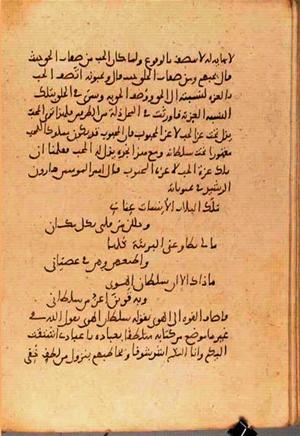
We thus know that this is love’s might, not the beloved’s might. The Commander of the Faithful, Harun al-Rashid, said concerning his beloved women:
The three charming ones possess my rein,
and have settled in every place within my heart.
Why does all creation obey me,
while I obey them and they disobey me?
It is only that the sovereignty of passion,
through which they are strong, is mightier than my sovereignty.
He thus ascribed strength to passion by saying, “the sovereignty of passion.”
God says in more than one place in His Book, showing kindness to His servants, “My servants, I have longed for you, and I long for you still more intensely.” He addresses them with a descent of hidden kindness.
Notas
Translator’s note TN3751-1: The divine address is introduced as God speaking in His Book and is retained as reported. The supplied text gives no chapter or verse reference for its wording.